Event Transport Logistics: A Practical Guide for 2026

A smooth event arrival depends not only on the number of vehicles but also on how each guest’s journey is planned. Planning event transport logistics means accounting for passenger numbers, arrival patterns and pickup points before the first departure. Without a clear plan, missed connections and confusing arrangements can put the event schedule under pressure.
Transport is part of the guest experience, not simply a line in the run sheet. You need a realistic movement plan that connects guests, event teams and transport providers, while giving individual travellers, groups and VIP guests the right level of comfort and discretion.
This guide shows you how to map passenger journeys to the event schedule, estimate transport needs and choose a suitable vehicle format. It also covers pickup communication and on-the-day coordination, so responsibilities are clear before guests set off. EPIC Limousines provides chauffeur-driven transport in Switzerland, with more than 10 years of experience and Mercedes-Benz S-Class, V-Class and Sprinter vehicle categories.
Key Takeaways
- Planning event transport logistics starts with a clear event brief, passenger profile, schedule, service format and communication plan.
- Combine confirmed passenger numbers, itinerary points and arrival windows in a movement plan that reflects the event schedule.
- Compare individual journeys, group transfers and chauffeur services to match each arrangement to guest needs and event timings.
- Prepare clear pickup instructions and assign responsibility for contacts, itinerary details and event-day updates.
- EPIC Limousines provides private chauffeur-driven transport for event guests, groups and VIP travellers, with Mercedes-Benz S-Class, V-Class and Sprinter vehicle categories.
What planning event transport logistics means for the guest experience
Event transport logistics is the planning and coordination of passenger journeys around an event’s schedule, guest requirements and pickup arrangements. It gives arrivals, departures and transfers a defined place in the event plan, rather than leaving each journey to be organised separately.
This passenger-focused workstream is distinct from freight logistics. It covers how people reach the venue, move between locations and travel onward after the event. Equipment delivery, parking management and venue operations may affect the wider event plan, but they aren’t passenger transport. For broader context, the Event Management Overview describes the wider discipline. This guide focuses on private and chauffeur-led passenger transport for events.
The distinction matters because guests experience the schedule through their journeys. A delayed group transfer can affect when attendees are ready to enter a programme. An unclear pickup arrangement can create uncertainty at departure. A VIP journey may also call for discreet handling and a different level of privacy from a shared group movement. Thoughtful coordination helps each journey support the event’s hospitality, rather than becoming a separate source of pressure.
Which event journeys belong in the transport plan?
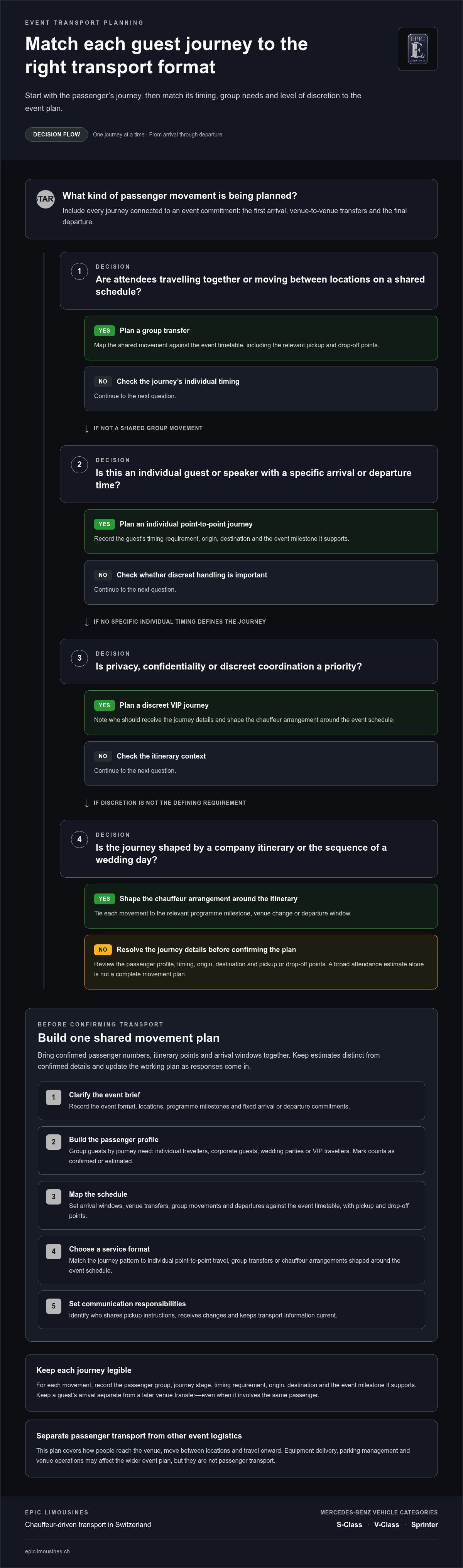
Include every passenger journey connected to an event commitment, from the first arrival to the final departure. Map each journey type separately, so one general instruction doesn’t have to serve guests with different needs.
- Individual travel: Point-to-point journeys for a guest or speaker with a specific arrival or departure time.
- Group movements: Transfers for attendees travelling together or moving between event locations on a shared schedule.
- Corporate and wedding travel: Journeys shaped by a company itinerary or the sequence of a wedding day.
- VIP travel: Journeys where privacy, confidentiality or discreet coordination is a priority.
Mark the stages tied to fixed timings, such as a scheduled programme, venue change or departure window. Note where discreet handling is needed and who should receive journey details. These distinctions make it easier to plan each movement around the guest experience, not just the vehicle schedule.
Why transport belongs in event planning from the outset
Transport decisions made late can leave little time to align arrival windows, pickup points and guest communications. This can result in conflicting instructions or a transfer plan that doesn’t reflect the event schedule. Early planning gives organisers time to connect passenger journeys with programme timings and set clear expectations.
A coordinated arrival is also an expression of hospitality. Guests who know where to meet and how their journey fits into the day can arrive with greater ease, while organisers can focus on preparing the event. Include transport in the initial planning conversation, alongside the schedule and guest requirements. This keeps the passenger journey visible as the wider plan develops.
How to map event transport needs before confirming the plan
A reliable transport plan begins with a shared picture of the event, its passengers and the journeys they need to make. Before arranging vehicles, consolidate confirmed passenger counts, itinerary points and arrival windows. Separate confirmed details from estimates, and update the working plan as responses come in. This gives organisers and transport coordinators a consistent basis for decisions.
Use this sequence to turn the event brief into practical passenger requirements:
- Clarify the event brief. Record the event format, locations, programme milestones and any fixed arrival or departure commitments.
- Build the passenger profile. Group guests by journey need, such as individual travellers, corporate guests, wedding parties or VIP travellers. Note which counts are confirmed and which remain estimates.
- Map the schedule. Set out arrival windows, transfers between venues, group movements and departures against the event timetable. Include the relevant pickup and drop-off points.
- Choose a service format. Match the journey pattern to individual point-to-point travel, group transfers or chauffeur arrangements shaped around the event schedule.
- Set communications. Decide who will share pickup instructions, receive changes and keep transport information current.
Build a passenger and itinerary brief
Keep the essential details in one working itinerary: passenger group, journey stage, timing requirement, origin, destination and the event milestone each movement supports. For example, distinguish a guest’s arrival journey from a scheduled transfer between venues, even if both involve the same passenger. This makes dependencies visible and helps organisers align transport with the actual event sequence.
Use the brief to flag details that still need resolving, such as an unconfirmed passenger count or a missing arrival window. Final arrangements should reflect the event timing and specific journeys required, not just a broad estimate of attendance. For corporate programmes, the corporate travel management guide offers relevant context for coordinating executive itineraries.
Assign coordination and communication responsibilities
Name one event-side contact to own transport updates and decisions, then establish a clear route for changes to reach the people affected. Specify which channel carries guest instructions and where the current itinerary is maintained. A simple escalation path, including who handles a timing change or revised passenger count, reduces crossed messages without implying that every disruption can be avoided.
Before confirming the plan, review the passenger brief against the latest schedule. Check that each journey has a defined purpose, timing and responsible contact, and that guest instructions match the agreed arrangement. For event journeys requiring private chauffeur-driven transport, EPIC Limousines’ chauffeur services can be planned around the passenger profile and desired travel experience. This makes planning event transport logistics more precise and easier to coordinate.
Which event transport arrangement fits your guests and schedule?
The right arrangement depends on who is travelling, whether journeys share a timetable and how much privacy each guest requires. A single traveller with a defined itinerary may suit an individual point-to-point journey. Guests moving together between event locations may be easier to coordinate as a group. For programmes with several journey stages, chauffeur services planned around the event schedule can connect those movements in one plan.
Use the comparison below to match the service format to your event’s priorities. These are planning distinctions, not fixed rules. Passenger needs and timings should guide the final arrangement.
| Arrangement | Passenger fit | Schedule flexibility | Coordination needs | Privacy considerations |
|---|---|---|---|---|
| Individual point-to-point | One traveller or a specific guest journey | Follows an individual itinerary | Coordinate each pickup and destination separately | Provides a private journey |
| Group transfer | Guests travelling together | Works around shared departure and arrival timings | Align the group’s pickup instructions and schedule | Passengers share the journey |
| Event-scheduled chauffeur service | Individuals or groups with linked event journeys | Can be planned around programme stages | Coordinate each journey with the event itinerary | Can accommodate discreet, private travel needs |
Individual journeys, group transfers, and multi-journey plans
For one traveller, planning centres on that person’s pickup, destination and event commitment. A group transfer adds shared timing: organisers need to align the meeting point, departure window and destination so guests can move together. If attendees have different arrival times but later share a transfer, plan those journey stages separately. The event requirements determine whether journeys are arranged individually or together.
For a multi-stage programme, map each movement against the relevant event milestone. A guest may need an individual arrival journey, then join a scheduled group transfer between venues, followed by a separate departure. Mapping the sequence prevents the entire event from being treated as one undifferentiated trip.
Choosing a vehicle category for the event
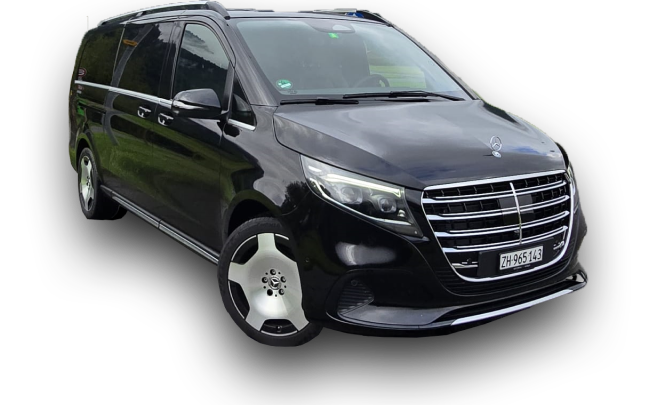
EPIC Limousines offers Mercedes-Benz S-Class, V-Class and Sprinter vehicle categories for private chauffeur-driven transport. Relate a vehicle request to the passenger group and desired travel experience, without assuming capacity from the model name alone. Organisers can request a specific vehicle type. For event-based chauffeur transport planning, consider each category alongside the journey’s passengers, timing and privacy requirements.
First separate journeys by purpose, then match the vehicle request to each passenger group. This connects the choice to the actual itinerary rather than appearance alone, making planning event transport logistics more considered.
How to coordinate event-day transport with clarity and discretion
On the day, a well-prepared transport plan should be easy for guests to follow and straightforward for the event team to manage. Clear instructions reduce uncertainty, while a defined update process helps the team respond calmly if timings or arrangements change. Discretion matters too: share passenger and itinerary information only with the people who need it to coordinate each journey.
Use this concise checklist before transport begins:
- Contacts: Identify the event-side transport lead and the relevant coordination contact for each journey.
- Itinerary: Keep one current version with agreed pickup points, destinations and timing references.
- Guest instructions: State where to meet, when to be there and whom to contact if they need help locating the agreed point.
- Update ownership: Decide who receives schedule changes, reviews their impact and shares revised instructions.
- Information handling: Limit access to guest names, journey details and VIP arrangements to those involved in coordination.
Prepare clear instructions for guests and event teams
Make each pickup message specific without overloading it. Name the agreed meeting point in plain language, include the relevant timing reference and provide the coordination contact. Use consistent wording across messages, especially when several guest groups travel on the same schedule. A coordinator may need the full itinerary, while an individual guest only needs details of their own journey.
Keep the latest agreed itinerary accessible to the people managing transport, and make clear which version is current. Avoid circulating unnecessary personal or VIP details in broad event communications. This supports an orderly handover between the event team and transport coordination while preserving guest privacy.
Plan for changes without losing control of the schedule
Set a simple change process before the first pickup. The designated organiser receives updates, checks which other journeys or programme milestones could be affected, then communicates revised instructions through the agreed channel. This review helps prevent one change from creating conflicting messages elsewhere in the itinerary. The process depends on clear responsibility and a reliable way to share confirmed updates.
For VIP movements, careful information handling is part of the transport plan, not an afterthought. Share only operationally necessary details, keep distribution limited and avoid discussing sensitive itineraries in open guest channels. Guidance on diplomatic transport and VIP confidentiality offers further context for journeys where discretion is especially important.
Planning event transport logistics with calm, consistent communication gives guests a more composed experience and helps organisers retain oversight as the schedule unfolds. For private chauffeur-driven event journeys, plan your event transport with EPIC Limousines, with guest requirements and discretion at the centre of the arrangement.
How EPIC Limousines supports a considered event transport plan
A private chauffeur service can be part of a considered plan for event guests, groups and VIP travellers. EPIC Limousines provides chauffeur-driven transport for single travellers and groups, with more than 10 years of experience transporting people. Arrangements can reflect the guest profile, itinerary and journey requirements, connecting transport with the event experience while keeping privacy and confidentiality in view.
Vehicle choice is one practical part of the discussion. EPIC Limousines offers Mercedes-Benz S-Class, V-Class and Sprinter categories, and organisers can request a specific vehicle type. Share the relevant passenger group and journey details so the request can be considered in the context of the event, rather than selected in isolation. Begin planning with the journey requirements instead of assuming seating capacity from the vehicle name.
A chauffeur service shaped around the event brief
For an individual guest, the brief may centre on a defined pickup and destination. A group itinerary may involve coordinated movements between event stages, while a VIP journey may place particular emphasis on discreet handling. EPIC Limousines’ private chauffeur-driven transport serves single travellers and groups, with the event brief guiding how each journey is planned. Organisers can request a specific vehicle category to suit the passenger group and desired travel experience.
Thoughtful provisions and a discreet guest experience
Consider the journey as part of guest care. Each vehicle includes free bottled water, refreshing towels, hand sanitiser and masks. The following items are available on request:
- Mints
- Newspapers
- Wi-Fi
- Phone chargers
These provisions support a composed journey without distracting from the event’s purpose. Privacy, security and confidentiality also inform EPIC Limousines’ chauffeur service. Organisers can treat guest and itinerary details with care and share them only as needed for coordination. The result is a transport arrangement designed around the people travelling, not simply the movement between locations.
As you continue planning event transport logistics, bring the passenger profile, event itinerary and preferred vehicle type into the same conversation. This gives the transport arrangement a clear connection to the event’s requirements and the guest experience you want to create.
For a courteous discussion of your event transport requirements, speak with EPIC Limousines about a tailored arrangement.
Make the guest journey part of your next event
Treat transport as part of the experience you’re creating, not an operational detail to resolve at the last moment. A considered approach to planning event transport logistics gives guests a more composed transition into the event and helps your team coordinate with confidence.
EPIC Limousines brings more than 10 years of experience transporting people, with private chauffeur transport for individuals and groups. Privacy, security and confidentiality remain central priorities, particularly for guests whose journeys call for discreet handling. The transport arrangement can be shaped around your event and the people attending it.
Start with the event schedule, passenger requirements and the experience you want guests to have. Discuss your event transport requirements with EPIC Limousines and take the next step towards a journey plan that feels as considered as the event itself.
Frequently Asked Questions
What is event transport logistics?
Event transport logistics is the passenger-focused part of preparing an event’s journeys, from getting attendees to the venue to arranging their onward travel. It considers how each movement fits the programme and guest needs. For example, arranging a speaker’s arrival is different from coordinating a group’s departure after the final session. Equipment deliveries and other event resources belong to separate logistics workstreams.
When should an event organiser start planning transport?
Begin once the event schedule, likely passenger groups and journey requirements start to take shape. Not every detail needs to be final. An organiser can map known movements first, then refine the plan as attendance and itineraries become clearer. For example, flag a likely group transfer in the initial schedule, then update passenger details when registrations provide a firmer picture. The right timing depends on the event.
Can one transport plan work for both individuals and groups?
Yes. One master plan can include individual journeys alongside coordinated group movements, provided each is clearly distinguished. A speaker may need a private journey tied to a programme start, while attendees share a transfer from the same meeting point. Record these as separate journey requirements, then note any shared schedule points. This makes planning event transport logistics adaptable without blending different guest instructions into one message.
What information should an event transport brief include?
Include the event timetable, passenger groups, expected journey needs, pickup and destination details, and the organiser responsible for transport updates. Add relevant privacy considerations, such as limiting VIP itinerary details to the coordination team. Keep the document concise and identify its latest version, so event staff don’t rely on outdated information. Include personal details only when necessary to arrange or coordinate the journey.
How can event organisers communicate transport changes to guests?
Choose one person to approve and share revised instructions, and use a consistent channel for updates. When a change affects only one journey, notify the relevant guest and coordinators rather than sending unnecessary details to everyone. Keep the event team’s itinerary aligned with the message guests receive. Clear ownership and careful distribution can reduce conflicting instructions, though they can’t prevent every delay or schedule change.
What should organisers consider when arranging VIP event transport?
Consider the guest’s itinerary, required arrival timing, communication preferences and the sensitivity of journey details. Keep operational information within the group responsible for coordination, and give the guest clear, discreet instructions. VIP travel doesn’t automatically require a particular vehicle or protection arrangement; base decisions on the event brief. EPIC Limousines places emphasis on privacy, security and confidentiality in its chauffeur service.