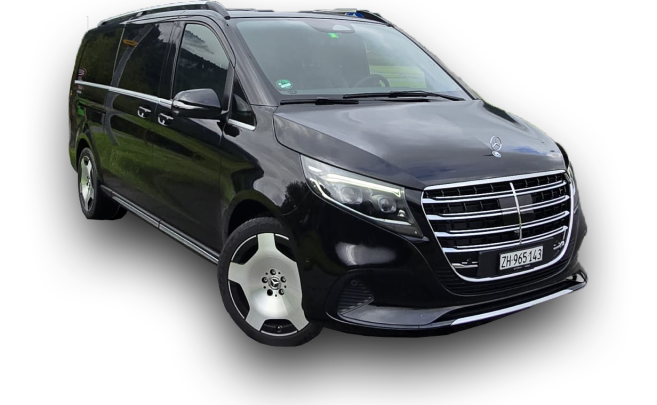
Professional Chauffeur Etiquette: The Standards of Exceptional Service

What if the clearest sign of excellent service is knowing when not to speak? Professional chauffeur etiquette is about more than safe driving or a polished arrival. It shows in a thoughtful greeting, calm communication and quiet awareness that help passengers feel at ease while respecting their privacy.
It’s natural to wonder whether to make conversation, how to share a preference or what to expect if plans change. A professional chauffeur should make these moments straightforward, responding with courtesy and composure rather than adding pressure to the journey. Attentiveness matters, but so does recognising when a passenger wants space.
This guide covers the conduct that shapes professional chauffeur service, from preparation and first impressions to communication and discretion during the journey. It also offers practical ways to share preferences and handle delays or special requests. Whether travelling for business, an event or a private occasion, knowing what to expect can help make the experience more comfortable and composed.
Key Takeaways
- Professional chauffeur etiquette is shown through consistent actions, not formal language or luxury cues alone.
- Assess service through a simple journey sequence: preparation, welcome, confirmation, adaptation and a considerate conclusion.
- Corporate, private and event journeys can have different priorities, while courtesy and discretion remain essential.
- If a concern arises, explain it calmly and clearly so the chauffeur has an opportunity to respond.
- Judge service by observable conduct, and check vehicle details, pricing and guarantees separately.
What does professional chauffeur etiquette mean for passengers?
Professional chauffeur etiquette is consistent conduct that combines safe, competent driving with courtesy, discretion, clear communication and reliability, helping passengers feel respected and at ease throughout a journey. It’s visible in practical choices: greeting a passenger politely, listening to preferences, respecting privacy and communicating calmly when plans need attention. Formal language or a luxury vehicle alone doesn’t establish that standard. Passengers experience it through conduct that remains considerate from the first interaction to the end of the trip.
How is a professional chauffeur different from a driver?
A chauffeur’s role includes the passenger experience as well as the journey itself. Preparation may mean understanding the agreed itinerary, being ready to welcome passengers and communicating relevant details clearly. During the trip, the chauffeur stays attentive without making the passenger manage every small interaction. These service considerations complement, rather than replace, safe driving and professional competence. For a broader background on what a chauffeur is, the profession has a distinct history; today, the role centres on both transport and service.
For example, a passenger travelling to a business appointment may appreciate a brief destination confirmation, followed by quiet time to prepare. Someone travelling for a private occasion may welcome conversation. Neither preference should be assumed. The chauffeur can pay attention to cues and respond respectfully.
Which principles shape good chauffeur etiquette?
These are useful service standards, not universal rules or legal requirements. Apply them in light of the passenger, journey and agreed arrangements:
- Punctuality: Respect the agreed schedule and communicate promptly if a delay affects the journey.
- Respect: Offer help courteously, follow reasonable preferences and avoid assumptions about what a passenger needs.
- Discretion: Treat personal conversations and information shared during a journey with care. Don’t press for details or repeat private remarks.
- Attentiveness: Notice practical cues, such as a passenger seeking quiet, without interrupting unnecessarily.
Conversation shows why attentiveness matters. A polite greeting can establish warmth, but continuing to talk when a passenger turns to work, rests or gives short answers may feel intrusive. A considerate chauffeur lets the passenger set the tone while remaining available if assistance is needed. This balance is central to professional chauffeur etiquette: service should feel personal without becoming overly familiar, and composed without seeming indifferent.
What should a professional chauffeur do before, during and after a journey?
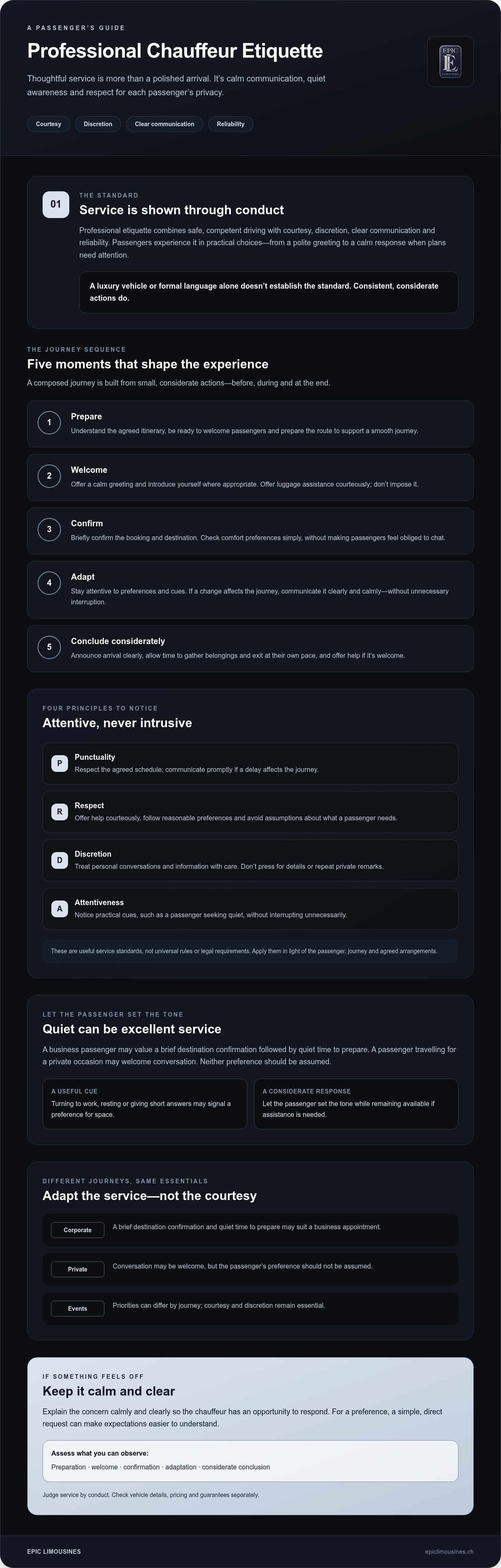
A composed journey is built from a sequence of small, considerate actions. Preparation helps the chauffeur arrive ready. A courteous welcome and brief confirmation establish clarity. Attentive adjustments support comfort, while an unhurried close gives passengers time to leave. Each action should support the agreed journey without adding needless conversation or interruption.
How should a chauffeur welcome and assist a passenger?
At pickup, a chauffeur should offer a calm greeting and introduce themselves where appropriate. A discreet confirmation of the booking helps ensure the right passenger and destination without asking for details already settled. Luggage assistance can be offered, not imposed. A simple question such as “Would you like any help with your bags?” leaves the decision to the passenger.
Comfort preferences can be checked just as simply: “Would you prefer a quiet journey?” or “Is the temperature comfortable?” A brief question gives passengers room to answer without making them feel obliged to chat. The Houston Limousine Association’s Chauffeur Professional Standards also discusses professional presentation, guest interaction and the value of silence.
Throughout the trip, the chauffeur should stay mindful of the confirmed destination and agreed preferences, adjusting communication if the passenger makes a request or circumstances change. Route preparation should support a smooth journey, but the passenger should not have to manage every detail. If an update affects the journey, communicate it clearly and calmly.
How should a chauffeur conclude the journey?
On arrival, a clear announcement gives the passenger time to gather their belongings and exit at their own pace. The chauffeur can offer help if it’s welcome, then discreetly check whether anything appears to have been left behind without handling personal items unnecessarily. A courteous farewell is enough. The close should feel gracious, not rushed, and shouldn’t include pressure for feedback or a tip.
A practical journey checklist:
- Prepare: Present a neat appearance, check that the vehicle is ready, and review the agreed itinerary and route.
- Welcome: Greet the passenger calmly, introduce yourself where appropriate, and offer assistance without assuming it’s needed.
- Confirm: Briefly verify the destination and invite any essential comfort preferences.
- Adapt: Respect requests for conversation, quiet or reasonable adjustments, and communicate relevant changes clearly.
- Conclude: Announce arrival, allow an unhurried exit, check discreetly for forgotten belongings and offer a polite farewell.
These steps make professional chauffeur etiquette observable rather than performative. If you’re considering chauffeur-driven travel in Switzerland, you can explore Epic Limousines’ chauffeur services as one option.
How does chauffeur etiquette change for corporate, private and VIP journeys?
The purpose of a journey shapes how a chauffeur communicates, what the passenger may need and how much interaction feels appropriate. A concise update can help a business traveller stay on schedule, while someone travelling to an event may appreciate a more personal welcome. The context changes the communication, not the core standard: courtesy, discretion and attention remain consistent. These distinctions matter when arranging corporate transport or travel for a private occasion.
| Journey type | Passenger priorities | Etiquette in practice |
|---|---|---|
| Corporate | Timing, focus and clear coordination | Keep updates concise, respect working time and avoid engaging with documents or calls. |
| Private | Comfort, personal preferences and an easy pace | Follow the passenger’s lead on conversation and offer assistance without assuming it’s needed. |
| Event | A composed arrival and a considerate experience | Confirm relevant arrangements calmly and adapt your manner to the occasion. |
What etiquette matters during corporate travel?
Business passengers may use the journey to prepare, take calls or gather their thoughts. Punctual coordination and brief, relevant communication help protect that time. A chauffeur should avoid initiating sensitive business topics, looking at passenger materials or treating a phone conversation as an invitation to join in. If an update is needed, keep it factual and discreet. For broader planning considerations, see this guide to corporate travel management in Switzerland.
How should discretion guide private and VIP journeys?
For private and VIP passengers, discretion means showing restraint: don’t ask intrusive questions, prolong conversation without a cue or discuss a passenger publicly. The same standard applies whether a guest is attending a personal event or travelling for a sensitive professional purpose. Discretion supports a comfortable atmosphere, but shouldn’t be presented as a confidentiality guarantee or a particular security procedure. The Houston Limousine Association’s Chauffeur Professional Standards offers additional industry guidance on conduct, communication and appearance.
Epic Limousines lists corporate travel, event transport and VIP protection transport among its services. Readers interested in the subject can explore its guide to diplomatic transport and VIP chauffeur services. Across these settings, professional chauffeur etiquette means recognising the purpose of the trip and adjusting the level of interaction without compromising respect or privacy.
How can passengers communicate expectations and handle awkward moments?
A calm journey is easier to shape when preferences are shared clearly and courteously. Passengers don’t need to wait for a problem before mentioning practical needs, and a chauffeur can acknowledge a request without promising something that may not be feasible. This mutual clarity is part of professional chauffeur etiquette: respectful communication helps both sides understand what matters and respond appropriately.
What should passengers tell a chauffeur before departure?
Share the confirmed destination, important timing constraints and comfort preferences that could affect the journey. For example, mention that you prefer a quiet ride or ask whether the temperature can be adjusted. If the itinerary changes, communicate it promptly through the agreed booking contact so the relevant person can assess the request. Provide only the personal information needed to arrange the journey.
How can both sides manage conversation and special requests?
There’s no need to hint. A passenger can say, “I’d prefer a quiet journey, thank you,” or “I’m happy to chat.” A chauffeur might respond, “Of course,” or “I’ll check whether that stop can be accommodated.” Acknowledging a request and clarifying what’s possible is more helpful than making an unsupported promise.
If a concern comes up during the trip, describe it calmly and specifically. “Could we adjust the temperature?” or “I think we may be heading to the wrong entrance” gives the chauffeur something clear to address. Allow time for a response before assuming the concern has been dismissed. A courteous exchange keeps the focus on resolving the practical issue rather than assigning blame.
Delays and itinerary changes can be stressful, particularly when arrival time matters. Share updated information as soon as you can, then ask what options may be available. The chauffeur can explain relevant constraints or clarify the next step, but neither side should assume a particular remedy or arrival time can be guaranteed. If plans change before pickup, use the agreed booking contact to avoid conflicting instructions.
Passengers and chauffeurs both contribute to a composed experience: one by stating expectations plainly, the other by listening, confirming understanding and responding courteously. If clear communication matters for your next journey, explore Epic Limousines’ chauffeur services.
What should you expect from a professional chauffeur service?
Look for conduct you can observe: clear and courteous communication, assistance offered respectfully, and care taken not to intrude on your privacy. Professional chauffeur etiquette can make a journey feel composed, but it’s only one part of assessing a service. A polished greeting may indicate consideration; it can’t verify vehicle condition, safety practices, pricing or other claims by itself.
Before booking, confirm practical details directly with the provider. Ask how booking information is communicated, how itinerary changes are handled and how passenger preferences can be shared. Make sure you understand the journey arrangements and which vehicle category is included. If a provider mentions guarantees, specific safety measures or other commitments, ask what those terms mean and how they’re confirmed. An etiquette checklist is useful, but it doesn’t replace checking the details that matter to you.
Which questions help assess a chauffeur booking?
- How will booking details be confirmed? Clarify how you’ll receive the pickup and destination information.
- How should I communicate a change? Find out which agreed contact to use if your plans or timing shift.
- Can you confirm the vehicle category and arrangements? Check that these match the journey you’re booking.
- How can I share preferences? Ask how to communicate requests about conversation, comfort or assistance.
Clear answers help set expectations, while leaving room to confirm details that depend on the specific booking. If something is unclear, ask before the journey rather than relying on assumptions.
How does Epic Limousines fit these expectations?
Epic Limousines provides chauffeur-driven Mercedes-Benz S-Class, V-Class and Sprinter services in Switzerland. Its stated offerings include corporate and private transport, event services and VIP protection transport. These contexts can call for different levels of coordination and interaction, while courtesy and discretion remain relevant throughout. The vehicle category describes one aspect of a booking; it doesn’t establish etiquette, safety or a particular service outcome on its own.
If coordinated, private transport matters to you, compare the confirmed journey arrangements with your needs and clarify any questions directly. A sound assessment considers both the quality of communication and the practical details behind the booking. You can explore Epic Limousines chauffeur services.
Choose a Journey That Feels Considered
Professional chauffeur etiquette is measured through consistent conduct: clear communication, respectful assistance and discretion that gives passengers room to travel comfortably. The right approach also reflects the purpose of the journey, whether business, private, event or VIP transport. Sharing preferences clearly and confirming practical booking details can help set expectations before departure.
When comparing services, look beyond a polished greeting. Confirm the vehicle category and journey arrangements directly, and treat etiquette as one part of your assessment, not proof of safety, specific vehicle features or service guarantees.
Epic Limousines provides chauffeur services in Mercedes-Benz S-Class, V-Class and Sprinter vehicles, with corporate, private, event and VIP transport offerings. If these options suit your travel needs, take a closer look at Epic Limousines chauffeur services. With clear expectations and a thoughtful choice, you can approach your next journey with greater confidence and ease.
Frequently Asked Questions
What is professional chauffeur etiquette?
Professional chauffeur etiquette is the conduct that supports a respectful, composed passenger journey. It includes preparation, punctuality, courteous communication, discreet assistance and respect for privacy. It isn’t defined by formal language or a luxury vehicle alone; passengers experience it through practical, consistent behaviour. The right approach also depends on passenger preferences and the purpose of the trip, so attentiveness means adapting without becoming intrusive or overly familiar.
How should a professional chauffeur greet a passenger?
A professional chauffeur should greet passengers calmly and courteously, offering a brief introduction where appropriate. They can discreetly confirm the passenger’s name or destination, then ask whether assistance is needed rather than assuming. Intrusive questions and an overly familiar manner can make the welcome uncomfortable. If a passenger indicates they’d prefer a quiet journey, respecting that preference from the outset establishes a considerate tone without making the interaction feel impersonal.
Should a chauffeur talk to passengers during a journey?
Conversation should follow the passenger’s preference and the context of the trip. A brief, polite exchange can create a comfortable welcome, but a chauffeur shouldn’t assume the passenger wants ongoing conversation. If the passenger engages, respond naturally; if they’re quiet, allow them space. Business calls, rest and private conversations shouldn’t be interrupted unnecessarily. A courteous chauffeur remains available without making silence feel awkward or treating it as an invitation to ask questions.
What should a chauffeur do if a passenger changes the itinerary?
The chauffeur should listen calmly, confirm the requested change and explain any practical limits clearly. They should follow the booking process agreed with the service provider rather than promise an adjustment they can’t confirm. Passengers can help by sharing changes as early as possible through the appropriate contact. Change policies vary by provider and booking, so there’s no single procedure that applies to every journey. Clear communication helps both sides understand the next step.
Is it appropriate to tip a professional chauffeur?
Tipping customs vary by country, provider and booking arrangement, so passengers shouldn’t assume a tip is required. If you’re unsure, check the booking terms or discreetly ask the service provider whether a gratuity is expected or included. A sincere thank-you is appropriate whether or not you choose to tip. There’s no need to follow a standard percentage, and a tip shouldn’t be treated as a measure of service quality.
What should passengers tell a chauffeur before the journey?
Share the confirmed destination, relevant timing needs and reasonable comfort preferences, such as whether you’d like a quiet ride. If plans change, pass the update promptly through the contact method agreed with the provider. Keep details concise and useful. You don’t need to disclose personal or business information unrelated to the trip. Clear instructions help the chauffeur respond appropriately while allowing you to maintain your privacy throughout the journey.
How can I tell whether a chauffeur service is professional?
Look for clear booking communication, a respectful greeting, discreet assistance and a willingness to clarify journey arrangements. Before confirming, ask what’s included and how changes or preferences are handled. These observable signs can help you assess the passenger experience, but polished etiquette alone doesn’t verify safety, qualifications or guarantees. Check any such claims separately with the provider. Professional chauffeur etiquette is a useful part of your evaluation, not a substitute for confirming the details that matter to you.