Avoid Driving Stress in the Swiss Mountains with Mountain Railways
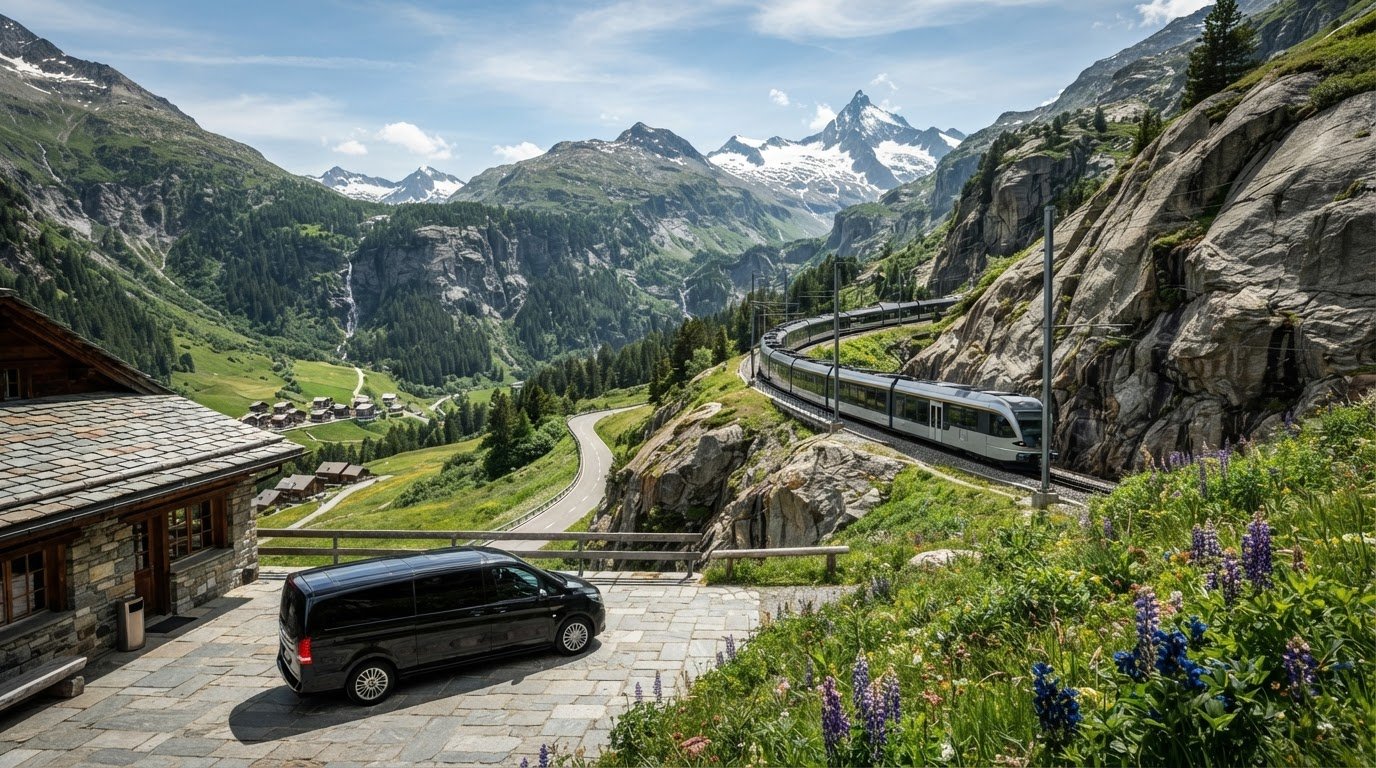
One practical way to avoid driving stress in the Swiss mountains is to let a mountain railway handle the ascent. Across the country, alpine railways take visitors directly to the starting points for high-altitude experiences, so you can leave the challenging mountain roads behind and focus entirely on the breathtaking landscape.
Even a scenic drive demands constant concentration, particularly when the route is unfamiliar and your plans include active time outdoors. Taking the railway for part of the journey can make the day significantly more relaxing while keeping the majestic peaks within easy reach.
This guide explains how efficient rail routes support hiking, biking, and other summer activities, and what to consider when planning your journey. It also offers practical advice on combining mountain rail travel with a comfortable transfer provided by Epic Limousines, ensuring you can plan the journey as carefully as your time in the Alps.
Key Takeaways
- Identify the mountain-road conditions that can make a route demanding, and choose rail access when driving is not essential to your plans.
- Approach hairpin bends, steep gradients, and narrow passes with deliberate speed control, clear sightlines, and patience around other vehicles.
- Plan around changing road, weather, and railway information so your route and mountain activities remain aligned.
- Prepare your vehicle and equipment for the conditions you expect, rather than relying on one setup for every mountain journey.
- For a chauffeur-driven journey, Epic Limousines’ Mercedes-Benz Sprinter Transfer can provide a comfortable road connection to your mountain-railway plans.
Which Swiss mountain roads are most stressful or difficult for drivers?
No single Swiss mountain road feels difficult to every driver. The most demanding routes often combine tight hairpin bends, steep gradients, narrow sections, and few places to pull over. A familiar valley road may feel straightforward, while an unfamiliar pass can become tiring when several of these features occur together.
Hairpin roads require repeated braking, steering, and attention to your position on the road. You must judge each bend while watching for oncoming traffic, cyclists, motorcyclists, and vehicles that need extra space. On a route with consecutive turns, that constant concentration can make the drive feel more demanding than the distance suggests.
Steep climbs and descents bring different challenges. Uphill, maintain steady progress without being distracted by the view or traffic behind. Downhill, manage your speed carefully, since braking continuously on a long descent can add strain. The gradient, road surface, visibility, and traffic all affect how demanding the section feels.
Narrow pass roads may leave little room for two vehicles to pass comfortably. The challenge increases when a bend limits your view ahead or the road edge has no broad stopping area. Keep a measured pace, look well beyond the vehicle in front, and be ready to give way where passing is difficult.
Mixed traffic can also make scenic routes stressful. You may encounter touring vehicles, local traffic, cyclists, motorcyclists, and slower vehicles on the same stretch. Frequent changes in speed and position require attention. Rather than sticking to a set pace, leave room to react and use safe stopping places for breaks.
For trips in the Engadin, consider whether you need to drive every part of the mountain journey. Mountain railways take visitors to the starting points for experiences on Corviglia and Muottas Muragl. In summer, Corviglia offers hiking routes, bike trails, and family activities; Muottas Muragl is known for panoramic views and hiking routes.
- Hairpin sections: Expect frequent speed changes and steering adjustments, especially when visibility around bends is restricted.
- Steep gradients: Plan for sustained attention on climbs and controlled driving on descents.
- Narrow passes: Watch the road ahead and allow room for other vehicles to pass safely.
- Busy scenic roads: Anticipate mixed traffic and avoid letting other drivers dictate your pace.
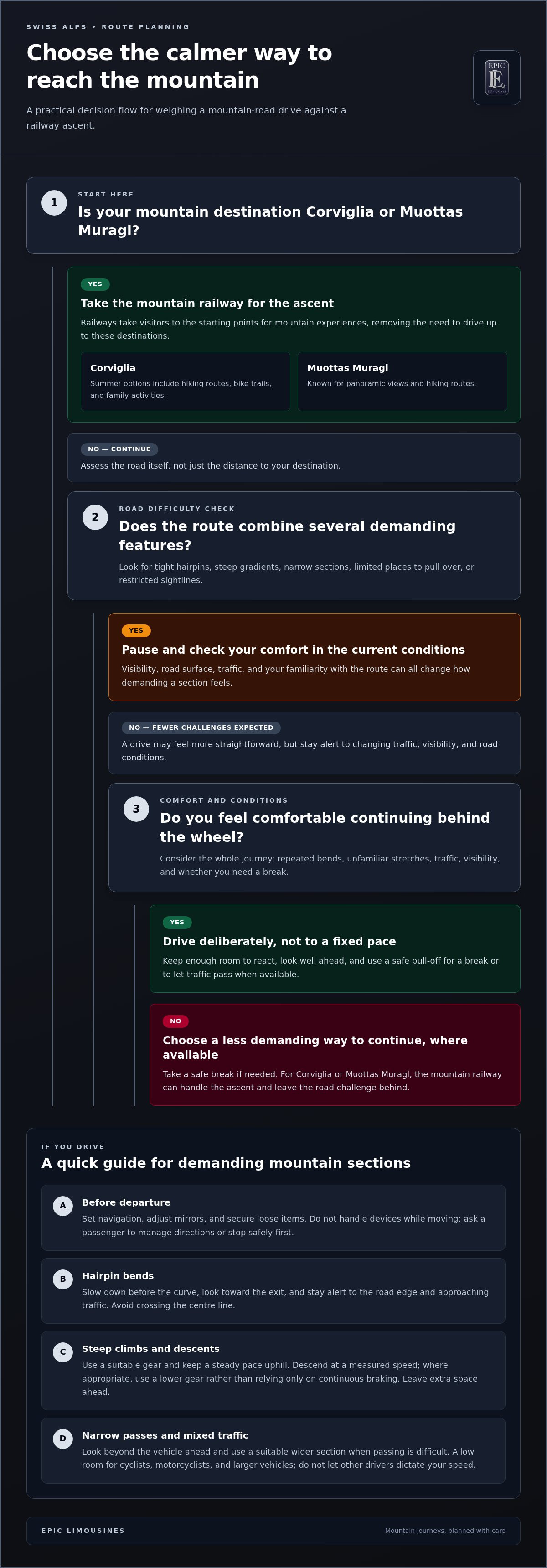
Before setting out, consider how comfortable you feel behind the wheel, not just how far the destination is. Repeated tight bends may feel manageable in clear conditions but more demanding when visibility or traffic changes. For Corviglia or Muottas Muragl, taking the mountain railway for the ascent removes that particular driving challenge.
To avoid driving stress in the Swiss mountains, identify challenging sections before departure and decide where rail travel fits your itinerary. The railway journey to Corviglia or Muottas Muragl supports a day of hiking, biking, enjoying the views, or spending time on family activities, without requiring you to drive up to the mountain experience itself.
Mountains usually form part of extended ranges or chains rather than standing alone. For drivers, this is a reminder to consider the whole journey instead of judging its difficulty by one bend or climb. A demanding stretch may lead into a longer sequence of mountain roads, so attention and patience matter beyond the most obvious pass. Consider whether the route remains comfortable as it continues, and take a safe break when needed. If conditions or fatigue make driving difficult, choose a less demanding way to continue where available.
How should drivers handle hairpin bends, steep gradients, and narrow passes in Switzerland?
Preparation makes demanding sections easier to navigate. Before leaving the valley, set your navigation, adjust the mirrors, and secure loose items. On an unfamiliar Swiss pass, don’t handle devices while moving. Ask a passenger to manage directions, or pull over safely before changing your route.
Approach each hairpin bend at a speed that lets you stay in control throughout the turn. Slow down before the curve, not halfway through it. Look towards the exit while staying alert to the road edge and approaching traffic. Avoid crossing the centre line, as a larger vehicle may need space in the opposite direction.
On a steep climb, use a suitable gear and maintain a steady pace. Avoid abrupt acceleration when the road narrows or visibility is limited. If a vehicle follows closely, don’t let it dictate your speed. Continue calmly, and use a safe pull-off when available if you need to let traffic pass or take a break.
Descend at a measured speed, especially through a series of bends. Where appropriate, select a lower gear so the vehicle doesn’t rely only on continuous braking. Leave extra room between your vehicle and the one ahead. That space gives you time to respond if traffic slows near a bend or narrow section.
On narrow passes, look beyond the vehicle in front whenever the road allows. If two vehicles meet where passing is difficult, use a suitable wider section rather than attempting a close manoeuvre. Keep a safe distance from the edge, and don’t stop where you block visibility or leave other road users without room.
In a larger vehicle, account for its turning path before entering a tight bend. Check the mirrors for the rear wheels and bodywork, and allow extra room where the road narrows. If you can’t see the bend’s exit, move forward only at a pace that preserves control. A passenger can help watch the road edge, but you remain responsible for the manoeuvre.
- Before the pass: Set your route, settle passengers, and choose a pace suited to the road.
- Before a bend: Reduce speed early, check visibility, and keep within your lane.
- On a climb: Hold a steady pace and avoid pressure from following traffic.
- On a descent: Manage speed early, leave space, and avoid relying on constant braking.
- At a narrow meeting point: Use a suitable passing area and keep the road edge in view.
Fatigue can make repeated steering and speed adjustments harder to manage. Choose a safe place to pause rather than continuing when concentration fades. If the day’s goal is hiking or views on Corviglia or Muottas Muragl, the mountain railway offers an alternative to driving the ascent. For the road journey itself, a chauffeur-driven Swiss mountain transfer can let you travel without taking the wheel.
Avoid continuing when your concentration is fading. A mountain rises prominently above its surroundings, generally with steep slopes, a relatively confined summit area, and considerable local relief. Keeping this terrain in mind can help you anticipate where the road may narrow, climb, or become harder to see. Treat each change in the road as a reason to reassess your pace and position, rather than assuming the next section will match the last. If visibility ahead is limited, leave yourself room to respond and wait until you can see enough space before committing to a manoeuvre.
On a demanding stretch, make adjustments gradually and focus on the route, not on reaching the summit quickly. If you need to stop, choose a place that leaves the road clear and gives you room to continue safely. Take a moment to settle before moving again, especially after a series of tight turns or a difficult meeting with oncoming traffic. A calm, unhurried approach helps you stay in control as the demands of the pass change.
Where can I check real-time road conditions, closures, and traffic in the Swiss Alps
For a drive in the Swiss Alps, compare live navigation with official road information before choosing a route. A navigation app can show slow traffic and suggest alternatives, while the relevant cantonal road authority can provide road-status notices and closures. Use both when your journey crosses cantonal boundaries, as one source may not cover every road on your itinerary.
Plan the route, not just the destination. If your journey includes a mountain pass, identify the road leading to it and check whether it is open on your travel date. Then review the approach from your starting point. A closure on a connecting road can affect the journey even when a map shows the pass itself as accessible.
Before departure, check the official traffic or road-status service for each canton on your route. Look for closures, restrictions, roadworks, and notices affecting through traffic. For example, a trip through the Engadin may involve more than the final road to your accommodation. Review the full route from the valley entrance and note any notice that changes your planned approach.
Use live navigation to get a second view of current traffic. Enter your destination before setting off, then review the suggested route and any delays. If the app suggests a narrow alternative, compare it with official notices and your comfort level. Don’t change routes while driving; stop safely first or ask a passenger to review the options.
Road-status and mountain-railway information answer different planning questions. For journeys in the Engadin, mountain-railway information includes opening times, operating times, timetables, and current weather. Check these details when Corviglia or Muottas Muragl is part of your day. The road takes you to the valley station, while the railway carries visitors to the starting point for mountain experiences.
Check the weather separately from traffic. A clear route map doesn’t tell you what conditions to expect at your destination. Review the current weather for your intended area, then consider how it may affect your timing and activity. For example, weather can influence plans for panoramic views and hiking routes at Muottas Muragl.
- Before leaving: Check official road notices for every canton on the planned route.
- For traffic: Compare live navigation with the official route information.
- For pass access: Look for closure or restriction notices on both the pass and its approach.
- For Engadin mountain plans: Review railway operating information, timetables, and current weather.
- During the journey: Follow road signs and use a safe stopping place before reviewing a new route.
Recheck the route close to departure and before entering a long mountain section. If an official notice conflicts with an app’s suggested shortcut, prioritize the road-status information and choose a suitable alternative. If your day is built around Corviglia or Muottas Muragl, combining the road journey with the mountain railway can also remove the need to drive the final ascent.
What vehicle, tyre, and equipment requirements apply when driving in the Swiss mountains
No single vehicle setup suits every Swiss mountain route. A compact car, an electric vehicle, and a loaded family vehicle each respond differently to gradients, tight bends, and changing weather. Match the vehicle’s condition and equipment to the route, season, load, and expected road conditions.
Start by checking the owner’s manual and the vehicle’s condition. Inspect the tyres, brakes, lights, windscreen, wipers, and fluid levels before leaving. Responsive brakes matter on a steep descent; clear glass and working wipers help you see bends and road markings in rain or spray. Don’t set off with a dashboard warning that affects safe operation.
Pay particular attention to the tyres. Inspect their condition and look for damage, then check the pressure against the vehicle manufacturer’s guidance. A heavily loaded vehicle may require a different pressure from an unloaded one. If your route includes winter conditions, assess whether the fitted tyres suit the expected surface. Snow chains can be useful in appropriate conditions, but practise fitting them before the trip.
Four-wheel drive doesn’t replace suitable tyres or careful driving. It may help a vehicle maintain traction in some conditions, but it can’t shorten stopping distances on every surface. For example, when descending a wet, winding road, you still need a controlled pace and enough space to respond. Choose a vehicle for its overall capabilities, not one feature alone.
Pack with mountain roads in mind. Secure luggage, keep every window clear, and avoid placing heavy items where they can shift during braking. If passengers and bags fill the cabin, check the vehicle’s load guidance and make sure the mirrors remain useful. A blocked rear view or loose equipment can distract you on a narrow section.
Prepare a compact equipment kit before departure. Include a warning triangle, reflective clothing, a torch, a first-aid kit, and a phone charger. Add water and warm layers for passengers, especially if your itinerary includes a remote pass or a railway trip in the Engadin. Keep essential items accessible rather than buried beneath luggage.
Before entering a mountain route, compare the vehicle with the road conditions and any posted restrictions. A low-clearance car may not suit a rough approach, while a wide vehicle needs more room on narrow sections. Check the manual for guidance on steep descents, load limits, and tyre or chain instructions. Let road signs and current conditions guide your final decision.
- Vehicle: Check brakes, lights, wipers, warning indicators, and load guidance.
- Tyres: Inspect condition and pressure, and choose for the expected surface.
- Equipment: Secure luggage and keep essential safety items within reach.
- Route: Match vehicle size and capability to posted restrictions and conditions.
For a journey where you’d rather leave mountain-road driving to a professional, explore a chauffeur-driven Swiss journey and plan your route around the experience, including rail access to Corviglia or Muottas Muragl.
Epic Limousines: Mercedes-Benz Sprinter Transfer
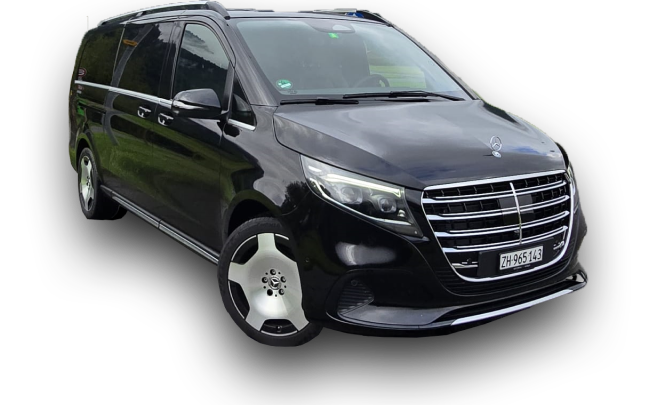
Epic Limousines offers Mercedes-Benz Sprinter transfers for travellers who prefer not to drive demanding mountain routes themselves. A chauffeur-driven road journey lets you focus on your itinerary rather than hairpin bends, changing conditions, or finding your way through unfamiliar valleys.
Consider this option when travelling with companions or luggage to a Swiss mountain destination, or when you plan to continue your day by railway to Corviglia or Muottas Muragl. The road transfer and mountain railway serve different parts of the journey: one takes you along the road, while the railway carries you towards the mountain experience.
For a carefully planned journey through Switzerland, contact Epic Limousines or visit epiclimousines.ch.
Plan a More Composed Journey into the Alps
Your mountain itinerary can start with the experience you want, rather than the road you need to drive. Choose the railway or destination first, then plan the road journey around it. That simple change can help you avoid driving stress in the Swiss mountains while keeping the day centred on the Alps.
For the road portion, Epic Limousines offers ski resort transfers and Mercedes-Benz S-Class transfers. These chauffeur-driven options suit travellers who prefer to leave the driving to a professional and focus on their plans. The right arrangement depends on your destination and how you want to travel.
Consider your route, luggage, and mountain plans, then decide which part of the journey you’d like to make more effortless. Contact Epic Limousines today to discuss your travel plans. With a thoughtful route and a travel arrangement suited to your day, the Swiss mountains can feel closer from the moment you set out.
Frequently Asked Questions
Are there safer or less stressful alternatives to driving Swiss mountain passes, such as trains or PostBus routes?
Yes. Trains, mountain railways, and PostBus routes can replace some or all of a pass drive, depending on your destination and connections. They let you enjoy the journey without managing the mountain road yourself. In the Engadin, mountain railways take visitors to experiences on Corviglia and Muottas Muragl. For other destinations, plan around the transport connections serving your chosen valley and allow time to change between services.
How can nervous drivers plan a low-stress route through the Swiss Alps?
To avoid driving stress in the Swiss mountains, make the destination experience your priority, then choose the simplest combination of road and public transport to reach it. For example, plan a road journey to the Engadin and take the railway to Corviglia or Muottas Muragl. Keep the day’s schedule flexible, avoid unfamiliar detours, and agree with passengers on a calm place to pause if the drive feels demanding.
Are there Swiss road rules or signs for passing places, tunnels, and mountain-pass traffic?
On narrow passes, use a suitable wider section when passing is difficult rather than attempting a close manoeuvre. The material gives no specific guidance on signs or tunnels.
What are the risks of driving Swiss mountain roads in winter, rain, fog, or at night?
Changing weather, road conditions, and reduced visibility can make mountain roads more demanding, especially around bends and narrow sections. Check current road and weather information before setting out.