Benefits of a Dedicated Trip Driver for Different Travelers
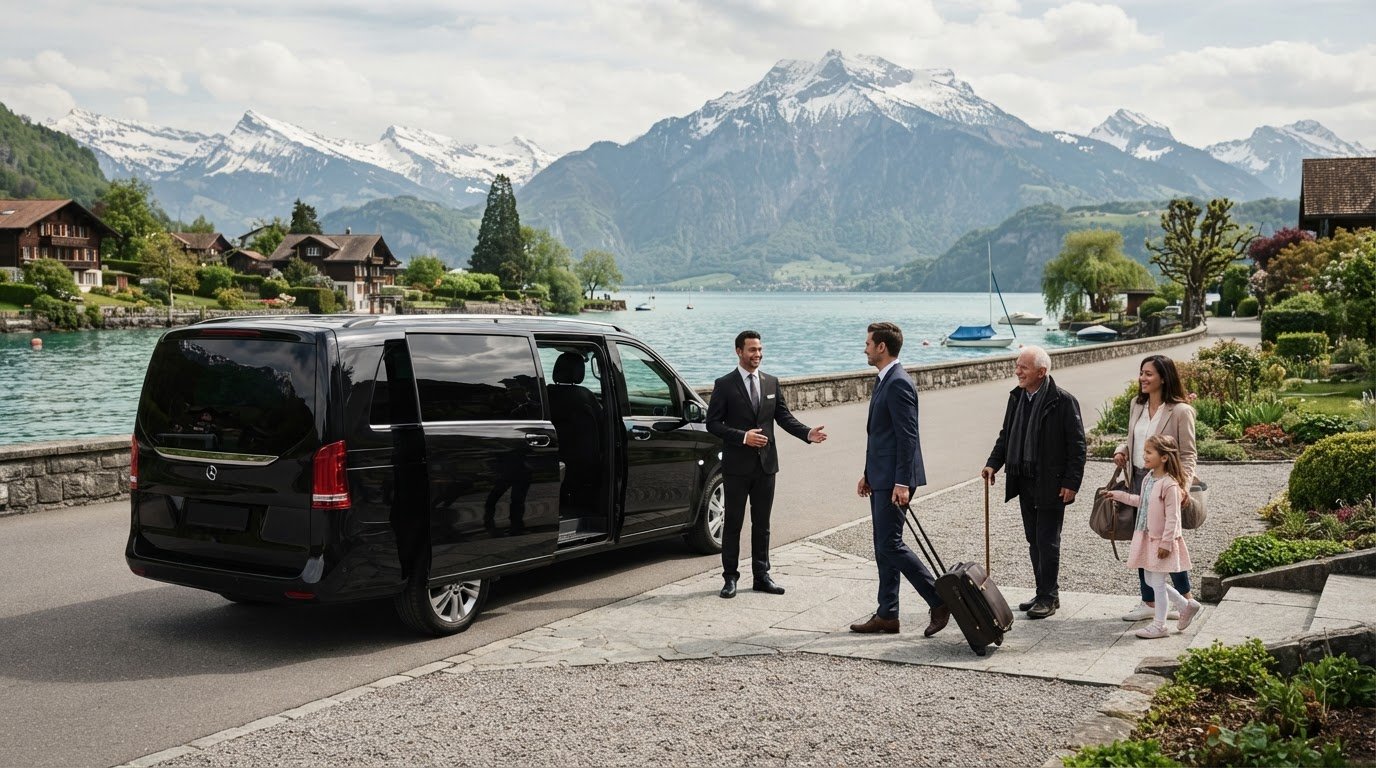
A dedicated trip driver is useful for business travellers, families, visitors with mobility needs, and anyone making several stops on a Swiss itinerary. The benefits of a dedicated trip driver include leaving the driving to a professional while shaping the journey around your schedule and preferences. Across connected journeys, continuity with the same driver can also make communication more familiar.
Convenient transport matters, but so does arriving composed, keeping plans manageable, and making the most of time between destinations. This article explains who hires a private driver-guide and how professional driving, tailored service, and repeat-driver assignments can support different kinds of trips. It also considers when a dedicated driver makes more sense than managing unfamiliar routes, parking, and connections yourself, from airport journeys and business schedules to sightseeing across Switzerland.
Key Takeaways
- Consider a dedicated driver when staying focused, travelling comfortably, or getting support with mobility needs matters during the journey.
- Choose a private journey when your itinerary calls for tailored stops and a schedule shaped around your group’s preferences.
- Repeat-driver assignments can create continuity, helping the service feel more familiar across a multi-stop trip.
- Compare the practical demands of driving, parking, and coordinating connections with the convenience of door-to-door transport.
2. Professional driving and passenger safety
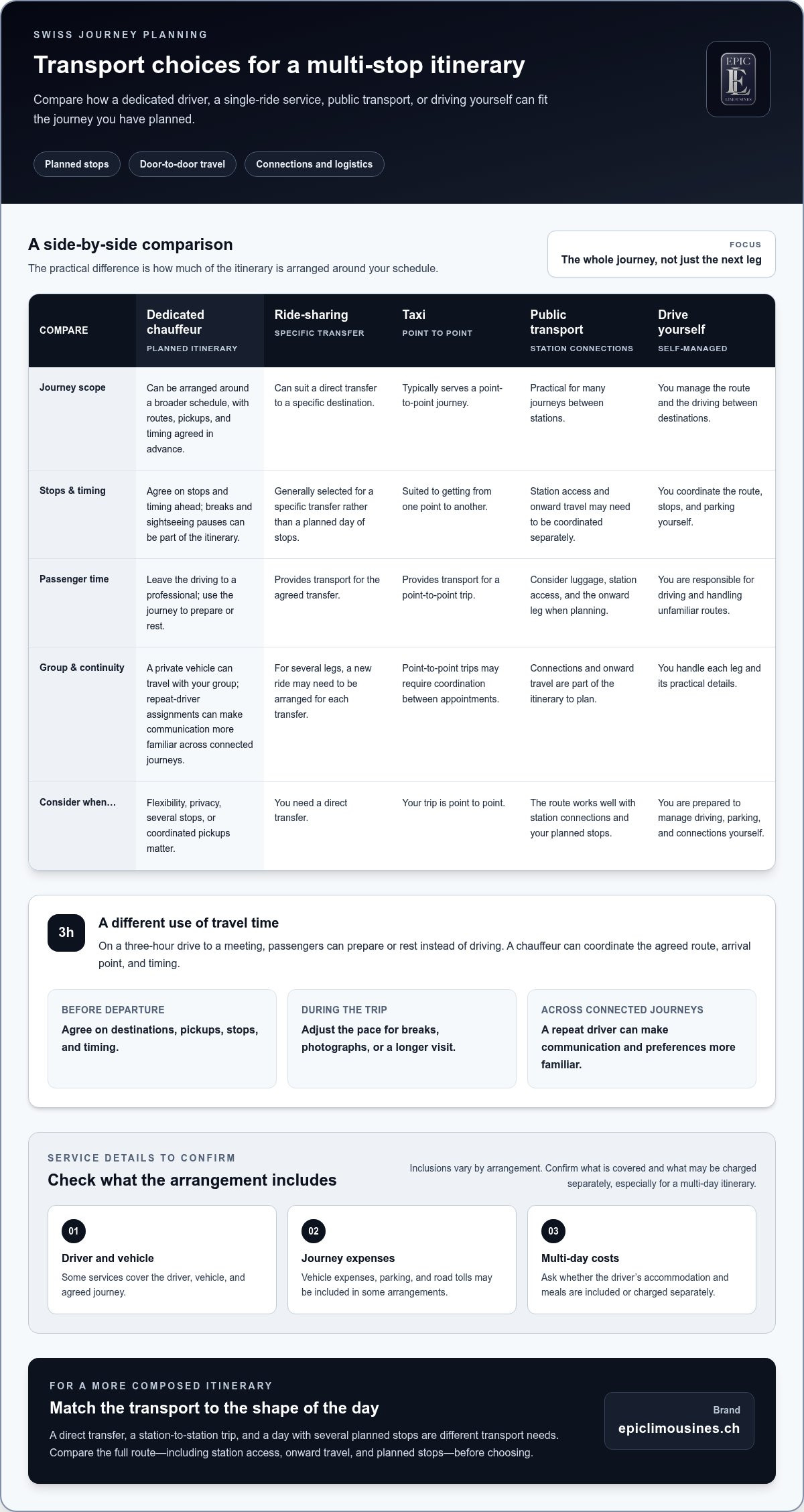
With a professional driver focused on the road, passengers can settle into the journey. On a three-hour drive to a meeting, for example, you can use the time to prepare or rest instead of driving. A chauffeur can also coordinate the agreed route, arrival point, and timing.
Safety and comfort depend on both the driver and the vehicle. Before travelling, look for evidence of professional training, a suitable driving record, and knowledge of the local area. Check the vehicle’s interior, seat belts, tyres, and visible condition at pickup. A maintained fleet and a composed driving style can make a long journey more comfortable, particularly for older passengers or people with mobility challenges.
In Switzerland, the Federal Statistical Office’s NOGA category for on-demand passenger transport covers vehicles with a driver for a maximum of 9 persons, including taxi and private-hire services. This is a business classification; cross-border journeys also involve the rules relevant to the destination and transport arrangement, so plan the route accordingly.
A dedicated driver service may cover the driver, vehicle, and agreed journey. Some private-trip arrangements also include vehicle expenses, parking, road tolls, and the driver’s accommodation and meals. These inclusions depend on the arrangement; clarify which items are included and which are charged separately before travel, especially for a multi-day itinerary.
To assess a service, use a simple four-step review: examine the driver’s licence, request evidence of insurance, inspect the vehicle at pickup, and read recent customer reviews. Also consider the driver’s training, local-area knowledge, and record. These checks help you assess the practical details behind a polished first impression, rather than relying on a luxury vehicle alone.
Professional service shows in small moments: a clear greeting, careful luggage handling, and calm communication when plans change. For a corporate arrival, a driver who knows the agreed destination and presents the vehicle in clean condition can help the journey feel composed. Discretion and attentive communication add comfort without distracting from the purpose of the trip.
3. Personalised service compared with ride-sharing
Ride-sharing can suit a direct transfer, while a dedicated chauffeur can arrange transport around a planned itinerary. You can agree on stops and timing in advance and travel with your group in a private vehicle. For example, a family visiting several Swiss destinations can plan breaks without arranging a separate ride for each leg.
A taxi typically serves a point-to-point journey, while a chauffeur arrangement can be planned around a broader schedule. That difference matters when a business guest has meetings at several venues or a wedding party needs coordinated transport. A professional driver can follow the agreed routes and pickups, making it easier for passengers to move between appointments.
Personalisation also shapes the experience in the vehicle. A private driver can follow an agreed itinerary that reflects your interests, while ride-sharing is generally chosen for a specific transfer. On a sightseeing day, for example, you can plan time for photographs or a longer visit rather than arranging a new ride at every stop. This option is most relevant when flexibility and privacy matter more than simply reaching one destination.
Companies can use external transport instead of managing their own fleet, driver salaries, insurance, and vehicle upkeep. For a team attending meetings across several venues in Switzerland, planned pickups can connect appointments without employees having to drive between them. This shifts coordination from internal fleet management to an arranged transportation service, while preserving employees’ time for work.
Trains remain practical for many Swiss journeys, especially between stations. Yet public transport can be less convenient when services are overcrowded, delayed, or cancelled, according to the European Commission. Door-to-door driving can suit travellers carrying luggage or following a route between locations that don’t align neatly with rail connections. Compare the full itinerary, including station access, onward travel, and planned stops.
For organizations coordinating transport across multiple appointments, Corporate Travel Management can provide a structured alternative to arranging each ride separately. It is particularly relevant when a work schedule involves several pickups and destinations.
4. Personalised service and repeat-driver assignments
Personalised attention starts with the details that make a journey feel special. A private driver can adapt stops for photographs, rest breaks, or a slower sightseeing pace. For example, visitors exploring several Swiss destinations can pause when a lakeside view catches their attention, rather than rushing to meet a fixed group itinerary.
Having the same driver across connected journeys can make communication more familiar. After an airport pickup, for example, you can share preferences about pace, luggage, and planned stops for the next day. That continuity can reduce repeated explanations and help you discuss adjustments if traffic changes the schedule.
For a tailored tour, agree on the priorities before departure: places to visit, time for breaks, and how much flexibility you want. A driver-guide can shape the route around those interests and answer questions along the way. If learning about the places you visit is important, choose a service that includes a guide rather than transportation alone.
Personal and luggage security also benefit from clear routines. Keep valuables with you, count bags when loading and unloading, and tell the driver which items need careful handling. A private driver can assist with luggage and mobility devices, helping passengers move between the vehicle and an entrance with less effort. These simple steps help keep belongings accounted for at each stop.
Frequent travellers may value consistency on recurring airport journeys. A traveller with regular business visits, for example, can share preferred pickup details and the order of planned stops to make future trips easier to coordinate. If traffic disrupts the route, direct communication helps the passenger and driver agree on the next destination. The result is a travel plan shaped around the traveller rather than a one-size-fits-all itinerary.
4. How does a dedicated trip driver compare with renting a car, taxis, and public transport?
Renting a car gives you control over departure times, but you handle the driving, navigation, and parking. That may suit a single destination or a familiar route. For a day linking a hotel, meeting venue, and dinner reservation, a dedicated driver can manage the transitions while you focus on your schedule. The practical difference is who takes responsibility for each leg.
Taxis work well for individual point-to-point journeys. Several planned stops may mean arranging separate pickups and coordinating each next destination. A dedicated driver can follow your itinerary, making this option worth considering for a sequence of appointments or sightseeing stops. The advantage is continuity, not a promise that every journey will avoid traffic or delays.
Public transport can be a suitable choice when stations match your route and you’re travelling light. It may be less convenient for door-to-door trips, particularly when services are overcrowded, delayed, or cancelled, according to the European Commission. Think through the complete connection: your starting point, station access, onward travel, luggage, and final destination. A private vehicle can simplify journeys where those separate legs create friction.
Compare options by mapping your itinerary before booking. Note the stops, the time needed to travel between them, and whether you need the vehicle to wait. Then consider which responsibilities you prefer: driving and parking yourself, arranging each taxi, or having a driver manage the route. For a group travelling together, one vehicle can also help everyone keep to the same schedule.
Choose the mode that fits the journey, rather than assuming one option suits every trip. For planned Swiss travel with multiple stops, discuss a dedicated journey and the schedule you want it to support.
Epic Limousines: Mercedes-Benz Sprinter Transfer
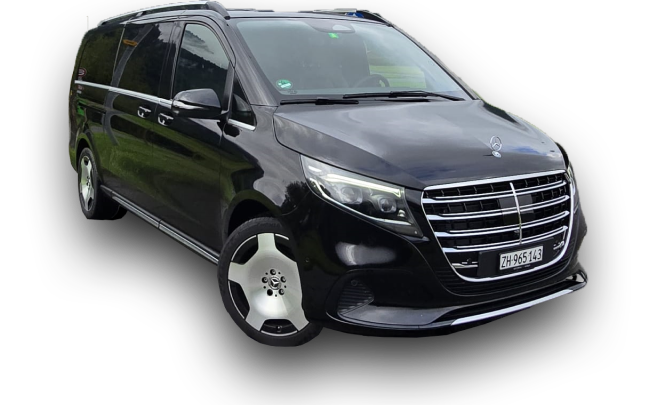
Epic Limousines offers chauffeur-driven Mercedes-Benz Sprinter transfers for travellers in Switzerland. This service can suit airport transfers, planned itineraries, or journeys where a dedicated vehicle helps keep the schedule coordinated. Depending on your trip, the Mercedes-Benz S-Class Transfer, Ski Resort Transfers, or WEF transfer may also be suitable.
Consider your route, destinations, and preferred transport arrangements before choosing. A pre-planned transfer may suit a journey to a ski resort, while a WEF transfer is designed for travel connected with the event. The right arrangement depends on the purpose of your journey and the level of personal service you prefer.
For a considered travel plan in Switzerland, contact Epic Limousines or visit epiclimousines.ch.
Shape your next Swiss journey around what matters
The right transport choice depends on your trip: its purpose, the stops you want to make, and how much you value a calm, private journey. For some travellers, the benefits of a dedicated trip driver are less about the vehicle than arriving with attention available for the people or plans ahead. Decide what would make the journey work best, then let that guide your arrangements.
Epic Limousines offers chauffeur-driven transport arranged around your Swiss itinerary. Share the purpose of your journey and the experience you are looking for, whether you are planning a personal visit or work-related travel. A clear outline is a practical starting point for planning your transport.
Contact Epic Limousines about your trip and take the next step towards a more thoughtfully arranged journey.
Frequently Asked Questions
Who hires a private driver-guide?
A private driver-guide suits visitors who want transport and local context in one arranged journey. A couple planning a countryside day, a family combining cultural stops, or a solo traveller seeking a tailored itinerary may appreciate a guide who explains the places along the route. Business travellers may need a chauffeur for transport, while a driver-guide is more relevant when learning about destinations is part of the trip.
Is It Worth the Cost?
A dedicated driver can be worthwhile when a coordinated journey matters more than arranging each leg independently. Consider how many destinations you plan to visit, how tight your schedule is, and how much time you would spend handling logistics yourself. A private journey may suit travellers who prioritise privacy and personal attention; a train or taxi may be a better fit for a simple, direct transfer.
Is it worth it for tourists or just business people?
A dedicated driver can suit tourists and business travellers alike. Visitors planning a day across several attractions may appreciate a route shaped around their interests, while business guests may value transport coordinated with appointments. A couple visiting museums and countryside locations has different priorities from an executive travelling between meetings, but both can benefit from a journey planned around its purpose.
Why should I hire a private chauffeur instead of a taxi?
Choose a private chauffeur when you need a planned arrangement rather than a single ride. A taxi can be convenient for travelling directly between two addresses; a chauffeur may suit an itinerary with several scheduled stops. For an occasion such as a wedding, transport arranged around the day’s sequence can simplify coordination for the couple and guests.
What are the main benefits of hiring a dedicated driver for a trip?
The main benefits of a dedicated trip driver are transport arranged around your plans, personal attention, and less responsibility for driving. You can use travel time to prepare for an appointment, talk with your companions, or enjoy the scenery. A dedicated arrangement is most useful when your route or schedule needs more coordination than a straightforward transfer.
How do dedicated drivers improve safety, comfort, and travel time on long trips?
A professional driver handles the driving, allowing passengers to rest instead of concentrating on unfamiliar roads. For a longer itinerary, agree on the destination sequence and any planned breaks before departure. A clear plan helps organise the journey and manage comfort. Traffic can still affect arrival times, so a private vehicle does not guarantee faster travel.