Executive Protection Driver Service in Switzerland for Full-Day Travel
Yes, a full-day itinerary can bring airport transfers, business meetings and dinner into one coordinated travel plan. An executive protection driver in Switzerland combines precise, discreet driving with close-protection support, while advance planning helps each transfer fit the day’s schedule.
That matters when a change of venue, delayed arrival or late finish could disrupt more than the journey. You need transport that keeps the programme moving and protection arranged around your privacy, timings and destinations, without drawing unnecessary attention.
This guide explains how chauffeur and bodyguard roles work together, what to plan before travel and how routes and schedules shape an assignment. You’ll also learn what to consider when arranging coverage across Switzerland, from airport arrival to meetings and an evening engagement, so the day feels composed rather than rushed.
Key Takeaways
- Align the chauffeur’s driving responsibilities with the bodyguard’s protection role so each can focus on their part of the journey.
- Build the route plan around the full itinerary, including airport arrival, meeting locations and the evening destination.
- Choose a booking model that reflects how much of the day requires coordinated transport and protection.
- Set the expected schedule in advance, including early starts, late finishes or changes to the day’s programme.
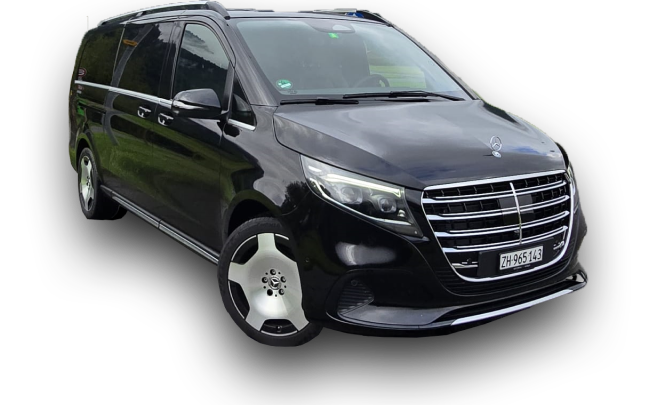
- For premium group transport, Epic Limousines’ Mercedes-Benz Sprinter Transfer can support travel between planned stops.
Pairing a precision-driving chauffeur with a dedicated bodyguard
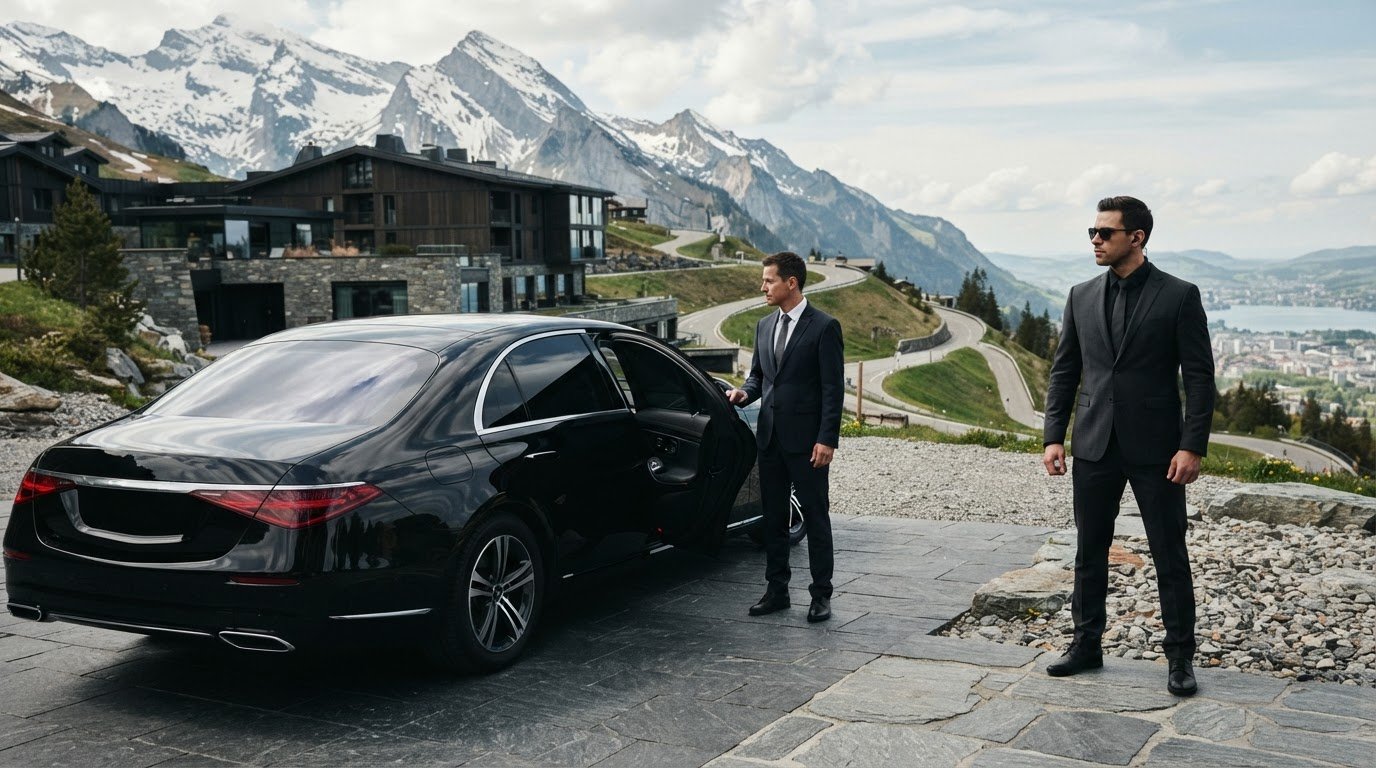
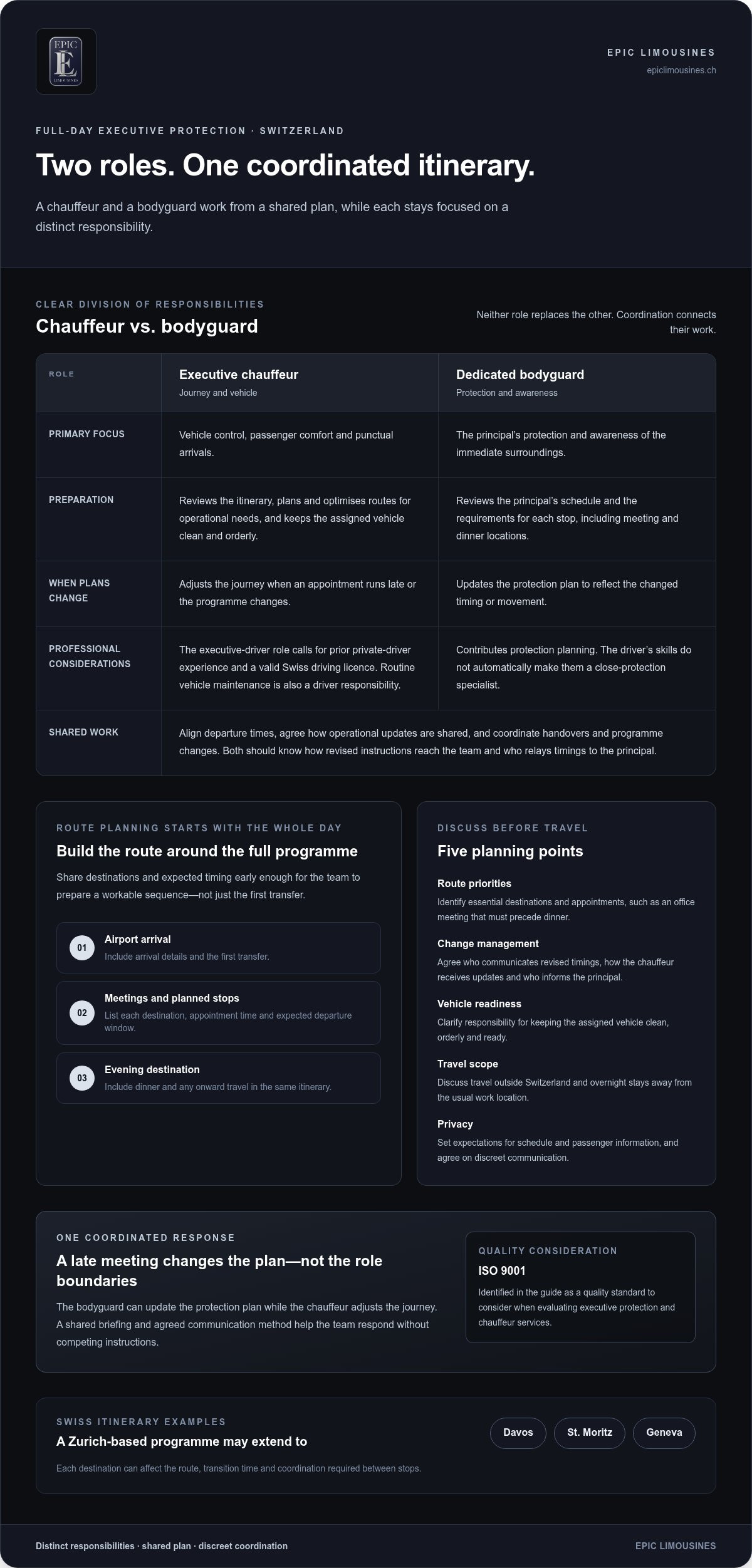
A full-day protection assignment works best when the chauffeur and bodyguard have distinct responsibilities and a shared plan. The chauffeur concentrates on vehicle control, passenger comfort and punctual arrivals. The bodyguard focuses on the principal’s protection and awareness of the immediate surroundings. For an airport arrival followed by meetings and dinner, that separation lets each professional prepare for a different part of the day.
Driving expertise means more than knowing the shortest route. The executive-driver role calls for prior private-driver experience and a valid Swiss driving licence. The driver also plans and optimises routes according to operational needs. The bodyguard contributes protection planning, while both professionals coordinate handovers, timings and programme changes. Neither role replaces the other: a skilled driver is not automatically a close-protection specialist.
Before travel, agree on a clear division of responsibilities. For example, the Epic Limousines team can decide who handles each of these tasks:
- Journey preparation: The chauffeur reviews the itinerary and keeps the assigned vehicle clean and orderly. Routine vehicle maintenance also falls within the driver’s responsibilities.
- Protection preparation: The bodyguard reviews the principal’s schedule and the requirements for each stop, such as the meeting venue and dinner location.
- Movement coordination: The two professionals align departure times and agree how they will share operational updates. A late-running appointment, for example, may affect the planned onward journey.
- Travel continuity: The team accounts for assignments that may involve travel outside Switzerland or overnight stays away from the usual work location.
Clear communication matters most when the schedule changes. If a meeting runs late, the bodyguard can update the protection plan while the chauffeur adjusts the journey. The principal receives one coordinated response rather than competing instructions. Agree on a discreet communication method before departure and decide who will relay revised timings to the principal.
Keep the working relationship professional and discreet. The Epic Limousines CEO-driver role calls for confidentiality and a professional demeanour, qualities that also support a composed protection environment. The bodyguard should know the driver’s operational role, and the driver should know which instructions affect the journey. For a full-day assignment, this preparation helps airport, office and dinner movements feel like parts of one carefully managed programme.
Before the assignment, confirm that the working arrangement is suitable for the intended continuity of service. The advertised Chauffeur/CEO Driver position with Epic Limousines is permanent. That employment detail can inform discussions about availability and handovers, but it does not remove the need to clarify the specific duties, reporting line and communication process for each protection assignment. Keep the plan practical: confirm the vehicle and schedule, identify who approves changes, and ensure both professionals know how updated instructions will reach them.
When reviewing providers, consider how their quality practices are assessed as well as their individual experience. ISO 9001 is identified as a quality standard for evaluating executive protection and chauffeur services nationwide. Use that standard as one point of consideration, alongside clear role boundaries, reliable coordination and a discreet approach. A shared briefing before departure helps the chauffeur preserve a smooth journey while the bodyguard remains focused on protection, allowing the principal to move through the day with fewer avoidable interruptions.
Advance and route planning
Before arranging a protection driver, discuss route changes, vehicle readiness, communication and confidentiality. Clarify who makes decisions if a meeting moves, an arrival is delayed or the itinerary changes.
Route planning starts with the complete programme, not just the first transfer. For an airport arrival, list every destination, appointment time and expected stop, including dinner. The driver plans and optimises routes according to operational needs. The protection professional considers how each movement fits the assignment.
Share the itinerary early enough for the team to prepare a workable sequence. Include the airport, meeting addresses, expected departure windows and any onward travel. A Zurich-based programme may extend to Davos, St. Moritz or Geneva. Each destination can change the route, transition time and coordination required between stops.
Before travel, discuss these practical points with the protection team:
- Route priorities: Identify essential destinations and appointments, such as a Zurich office meeting that must precede dinner. This helps the driver compare route options against the actual schedule.
- Change management: Agree who communicates revised timings when a meeting runs late. Decide how the chauffeur receives the update and who informs the principal.
- Vehicle readiness: Clarify responsibility for keeping the assigned vehicle clean, orderly and ready for the planned journey. Routine maintenance is part of the executive driver’s responsibilities.
- Travel scope: Discuss whether the assignment may extend beyond Switzerland or require an overnight stay away from the usual work location. These conditions affect the itinerary and working arrangements.
- Privacy: Set expectations for handling schedule details and passenger information. A discreet communication plan can limit unnecessary sharing during the day.
Safety considerations should include the driver’s private-driving experience and valid Swiss driving licence, alongside the bodyguard’s distinct protection responsibilities. Discuss how the team handles schedule changes, vehicle readiness, confidential information and any travel beyond Switzerland before the assignment begins.
For example, a Zurich meeting that shifts later can affect a planned onward journey to Geneva. The team should know how to relay the new timing, revise the route and keep the principal informed. A clear decision process reduces confusion without treating the original itinerary as fixed.
For assignments centred on protected travel, Diplomatic & VIP Protection Transport is a relevant option to consider. A prepared itinerary gives the transport team a clear basis for coordinating airport, meeting and dinner movements across Switzerland.
For assignments requiring broader coverage, Zurich protection planning may include onward coverage in Davos, St. Moritz and Geneva. Confirm these destinations in advance so route coordination reflects the full programme.
Booking and protection service models
Choose a booking structure around the itinerary, protection needs and amount of time between stops. For a Zurich airport arrival, meetings and dinner, define the journey scope before confirming the arrangement.
Driver Qualifications and Licenses
An executive driver in Switzerland should have prior private-driver experience and a valid Swiss driving licence. These are the stated qualifications for the role; they don’t by themselves establish close-protection expertise. Clarify whether the assignment pairs the driver with a dedicated bodyguard, and identify each person’s responsibilities. For a full-day itinerary, also discuss whether travel outside Switzerland or overnight stays may be required.
Airport and cross-border arrangements work best when you share the full itinerary at booking. Specify whether the journey begins at Zurich, Geneva or Basel Airport, then provide meeting destinations and onward travel plans. Discuss travel beyond Switzerland directly, including the route scope, overnight requirements and who coordinates schedule changes. This creates a clear operational plan without assuming that airport pickup alone covers the entire assignment.
Service Costs
The price depends on the case and is provided after a quote request. Main cost factors include assignment duration, route, number of stops, whether a dedicated bodyguard is included, and any travel or overnight requirements. A point-to-point booking covers a defined transfer, while a full-day arrangement can cover several planned movements. Describe your schedule accurately so the proposed service model reflects the work involved.
Location also shapes the booking structure. Zurich, Geneva and Basel can each serve as airport starting points, while a programme may continue to Davos or St. Moritz. These destinations can require different routing and time planning. State whether the assignment is limited to one city or connects several Swiss regions, and include any international destinations in the requested itinerary.
Credential and Reputation Checks
Ask to review the driver’s valid Swiss licence and establish their prior private-driving experience. For the protection role, clarify the assigned duties and the professional’s relevant close-protection experience. Check the proposed service scope in writing, including who handles driving, protection coordination, schedule updates and confidential information. These steps help you assess whether the people and arrangement match the assignment.
To assess a company’s reputation, look for consistent client feedback and request relevant professional references where appropriate. Compare those accounts with the written booking terms and the assigned personnel. A clear explanation of responsibilities is more useful than a broad claim of security. For an itinerary connecting several destinations, for example, confirm that the documented arrangement covers the airport, intermediate meetings and onward travel.
Before confirming, send the airport, destinations, schedule and cross-border requirements together. This complete itinerary lets the service team define the booking model, route scope and protection responsibilities in relation to the actual programme.
Dedicated chauffeur availability
A dedicated chauffeur’s schedule should match the principal’s programme, not just the first pickup. Executive-driver assignments are primarily scheduled over 5 days per week, with hours shaped by professional commitments. A Zurich itinerary with an early airport arrival, meetings and dinner may therefore require a different daily pattern from a single transfer.
Before confirming an assignment, map the expected working days and likely start and finish times. Early mornings and late evenings can be part of the schedule, especially when flights or business events set the pace. Weekend work may also be required when the principal’s commitments extend beyond the usual working week. Include these expectations in the agreed schedule.
Use the itinerary to identify where availability matters most. A morning arrival followed by meetings and an evening engagement, for example, calls for continuity throughout the day. A programme that includes an overnight stay away from the usual work location needs separate planning for the next day’s departure. Travel outside Switzerland can also affect the driver’s schedule and time away.
Clarify these scheduling details before the assignment begins:
- Working pattern: Set out the expected working days, including whether the arrangement follows the primary 5-day schedule.
- Daily timing: Share likely airport arrival times, meeting windows and evening commitments. Identify early starts and late finishes in advance.
- Weekend commitments: Note any professional events that could require weekend availability, such as a conference or an executive dinner.
- Travel scope: Include overnight stays and journeys outside Switzerland in the calendar, rather than treating them as ordinary local transfers.
- Schedule changes: Agree how updates will reach the chauffeur when a flight, meeting or dinner time changes.
Separate role-specific figures from a chauffeur’s personal schedule. For instance, a Zurich-based Head of Executive Protection role involves travel for approximately 30% of the role holder’s time. That figure describes the named protection leadership role, not a standard chauffeur availability requirement.
One executive-driver assignment was scheduled to start in October 2026. Such a date belongs to that particular assignment, not a general Swiss start-date rule. For your own programme, share the intended start date, expected duration and recurring commitments. A permanent, full-time position differs from a short itinerary covering an airport, meetings and dinner, so define the required coverage clearly.
For a multi-day schedule, provide a calendar that separates confirmed appointments from likely additions. This helps the team understand when the chauffeur must remain dedicated to the principal and when the programme includes travel or overnight stays. A precise schedule supports a more coherent plan for each working day.
Discreet close protection and confidentiality
Discretion depends on practical conduct, not simply a quiet vehicle. At a Zurich hotel, for example, the principal may want the driver to avoid discussing meeting details in public. Agree on how names, locations and schedule changes are shared before the first pickup. The chauffeur’s role remains distinct from the bodyguard’s protection duties, even when both support the same itinerary.
In Switzerland, armed security and close protection must be distinguished from ordinary chauffeur duties. Before booking, establish whether the assignment is armed, which Swiss and cantonal requirements apply, and who is responsible for the relevant authorisations.
Confidentiality expectations should cover conversations, passenger details and itinerary documents. Set a clear process for handling updates, especially when a meeting moves from Zurich to Geneva or dinner plans change. Share operational details only with people who need them for the assignment. That simple distinction helps protect privacy without disrupting coordination.
Discuss these points before travel:
- Information handling: Agree who receives the itinerary and how revised addresses reach the chauffeur and bodyguard.
- Public conduct: Set expectations for greetings, waiting locations and conversation near colleagues or guests.
- Role boundaries: Clarify whether the chauffeur handles driving alone or has separate protection responsibilities. Do not treat driving experience as proof of close-protection training.
- Armed status: State plainly whether the assignment requires an armed element. Establish responsibility for applicable authorisations before service begins.
A discreet team also needs a considered approach to visible security. For a board meeting in Zurich, the principal may prefer a quiet arrival and minimal discussion at the entrance. The bodyguard can plan their protection role around that preference, while the chauffeur focuses on the agreed pickup and vehicle movement. Clear instructions help both professionals act consistently.
Confidentiality matters when schedules include several sensitive stops. A Geneva meeting followed by a private dinner, for instance, creates information that should not be casually repeated. Decide how changes are communicated, who may receive them and how unnecessary details are kept out of public conversation. These practical steps make privacy part of the day’s operating plan.
For discreet travel with a protection focus, discuss VIP protection transport as part of the itinerary planning.
Epic Limousines: Mercedes-Benz Sprinter Transfer
Epic Limousines offers Mercedes-Benz Sprinter Transfers for clients coordinating travel between an airport, business meetings and an evening engagement. A Sprinter can suit an itinerary where group transport is useful; a Mercedes-Benz S-Class Transfer is another option for an individual journey. For plans involving ski resorts or the World Economic Forum, Epic Limousines also offers Ski Resort Transfers and WEF transfer services.
Share your destinations and timing when arranging transport so the journey can be considered in the context of the day’s programme. Chauffeur transport and dedicated close protection are distinct requirements, so set out both when planning your arrangements.
Please contact Epic Limousines to discuss your travel itinerary.
Shape the next journey around your priorities
Your next step is to turn the itinerary into a clear brief: identify your travel priorities, the movements that matter most and how protection should fit around your schedule. Choosing an executive protection driver in Switzerland begins with matching the travel arrangement to your requirements, rather than treating every assignment as the same journey.
Epic Limousines offers Mercedes-Benz Sprinter, Mercedes-Benz S-Class and ski resort transfers. These options support different travel plans, from group journeys to individual transfers and resort travel. Share your destinations and programme to discuss the arrangement in context.
A considered plan helps you approach the day with greater clarity and make informed decisions about the support you need. For a personal discussion of your itinerary, contact Epic Limousines to discuss your protection service. Your next journey can begin with a thoughtful conversation and a plan shaped around you.
Frequently Asked Questions
Can a corporate driver cover the full programme, airport, meetings and dinner?
Yes, a chauffeur can be booked for a planned itinerary from airport arrival through meetings and dinner. An executive protection driver in Switzerland can support a coordinated travel schedule, while close protection remains a distinct responsibility requiring appropriate personnel. If a meeting runs late, for example, the chauffeur can adjust the onward journey. Share your destinations and timing when arranging the day, and clarify who handles protection duties.
What does an executive protection driver do in Switzerland?
An executive protection driver in Switzerland provides discreet transport shaped around the passenger’s itinerary and operational needs. The role may include preparing for a changed destination and keeping the vehicle ready for the next departure. It requires prior private-driver experience and a valid Swiss driving licence. If an appointment moves to another venue, for example, the driver adapts the journey while the protection professional addresses security considerations.
How do executive protection drivers differ from chauffeur or bodyguard services in Switzerland?
A chauffeur’s primary responsibility is passenger transport, while a bodyguard focuses on close protection. An executive-driver assignment may coordinate these professionals, but their duties aren’t interchangeable. If a meeting runs late, for instance, the chauffeur manages the journey while the bodyguard handles protection considerations. Before travel, establish each person’s responsibilities, particularly if the schedule includes sensitive engagements or several destinations.
What vehicle options are available for executive protection driving in Switzerland?
Chauffeur-driven options include the Mercedes-Benz S-Class, V-Class and Sprinter. Choose according to the practical needs of the journey, including whether the passenger is travelling alone or with a group. A Sprinter may suit group transport, while an S-Class may suit an individual transfer. Vehicle choice shapes the transport arrangement, but it doesn’t determine or replace the separate close-protection plan.