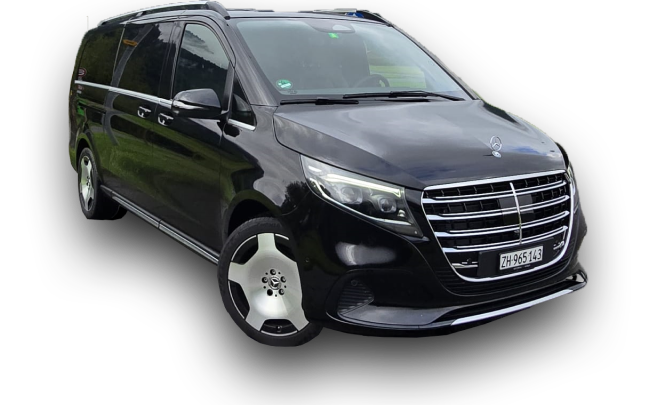
Luxury Ground Transport for MICE Delegations and Conferences
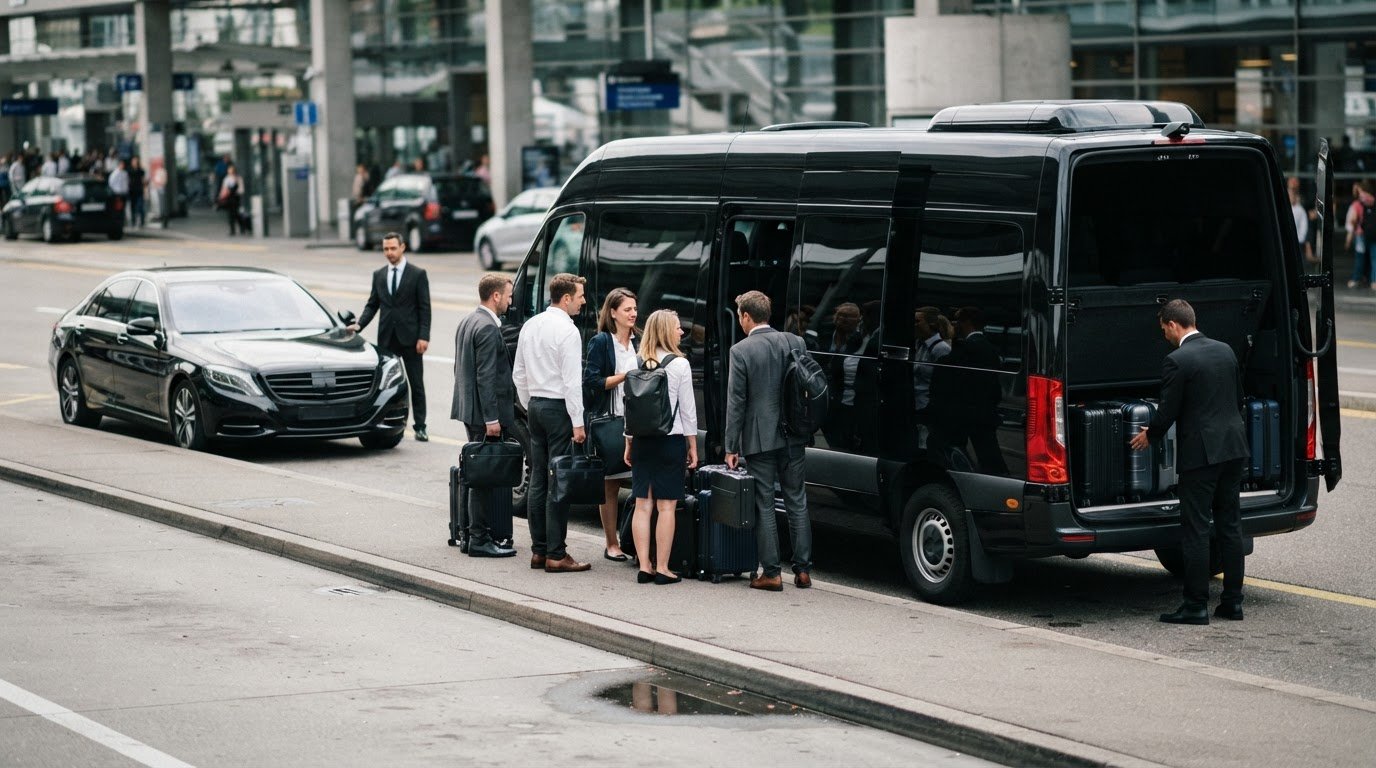
The most polished event transfer plan isn’t built around a single vehicle. In Switzerland, luxury ground transport for MICE events works best as a coordinated journey, with vehicle sizes matched to guest groups and timings aligned across airport arrivals, venues and departures. A Mercedes Sprinter minibus can carry up to 15 passengers, while individual VIPs may travel in a luxury sedan.
It’s easy to focus on the vehicles, but smooth logistics also depend on what happens between landing and the first appointment. Meet-and-greet coordination, luggage handling, clear pickup instructions and realistic transfer times help guests move through a busy programme with less uncertainty.
This guide explains how to coordinate transport for conferences, trade fairs, forums and diplomatic events in Switzerland. You’ll learn how to plan different arrangements for VIPs, executives and general attendees, organise chauffeur transfers and prepare for changes without adding unnecessary complexity. It also covers the practical details that keep the guest journey coherent, from baggage collection and venue access to an alternative pickup point if the main entrance becomes inaccessible.
Key Takeaways
- Map guest categories to suitable transfer arrangements so VIPs, executives and general attendees can travel according to their needs.
- Build airport pickups around the full arrival journey, including baggage collection, clear instructions and realistic time before the first appointment.
- Set clear protocols for sharing sensitive guest details with chauffeurs, and plan how multi-day transfers will stay consistent.
- For trade fairs, forums and diplomatic events, prepare for venue access changes and coordinate transport around the event’s specific demands.
Multi-vehicle coordination for delegations and conferences
Compare service quality by assessing punctuality, clear dispatch communication and consistent pickup instructions. To evaluate sustainability, accessibility and multilingual support, specify the event’s requirements in the transport plan, then compare fleet details, passenger access needs and language coverage. This turns each criterion into a practical check rather than a broad claim.
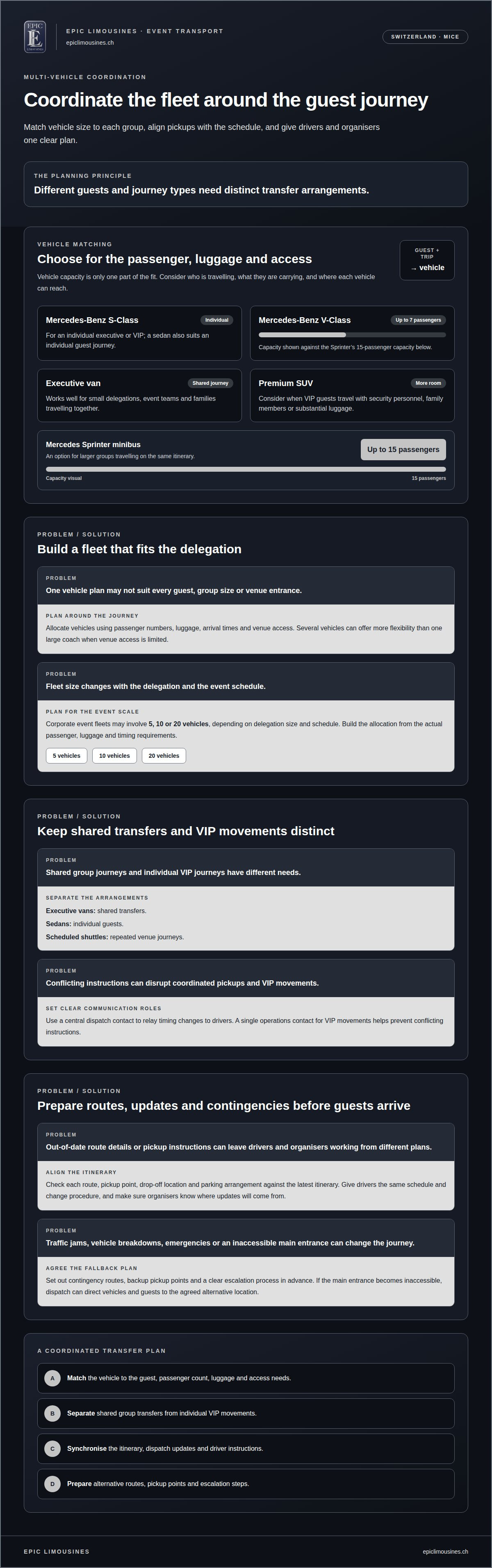
Match vehicle type to the guest and journey. A Mercedes-Benz S-Class suits an individual executive or VIP, while a V-Class can seat up to 7 passengers. Executive vans work well for small delegations, event teams and families travelling together. A premium SUV offers more room when VIP guests travel with security personnel, family members or substantial luggage.
For corporate events, coordinated fleets may involve 5, 10 or 20 vehicles, depending on delegation size and the schedule. Build the allocation around passenger numbers, luggage, arrival times and venue access. Several vehicles can offer more flexibility than one large coach when a venue has limited access.
Group transfers and VIP journeys need distinct arrangements. Use executive vans for shared transfers, sedans for individual guests and scheduled shuttles for repeated venue journeys. A central dispatch contact can relay timing changes to drivers, while a single operations contact helps prevent conflicting instructions for VIP movements.
Before the event, check each route, pickup point, drop-off location and parking arrangement against the latest itinerary. Give drivers the same schedule and change procedure, and make sure organisers know where updates will come from. These checks help international delegations travel comfortably and stay on schedule.
In Switzerland, plan for risks such as traffic jams, vehicle breakdowns and emergencies. Set out contingency routes, backup pickup points and a clear escalation process before guests arrive. If a main entrance becomes inaccessible, dispatch can direct vehicles and guests to the agreed alternative location.
Airport meet and greet and luggage handling
For each airport arrival, match the guest manifest with a named pickup point, flight details and onward destination. A meet-and-greet coordinator can welcome delegates, guide them to the correct vehicle and update the transport team if arrival details change. This gives international guests a clear first step instead of leaving them to interpret separate messages after landing.
In Switzerland, airport coordination can be planned for Zurich, Geneva and Bern. Build each transfer around the guest’s arrival, baggage collection and first appointment, allowing realistic time between landing and leaving the airport. A Mercedes sedan may suit an individual speaker, while a group vehicle can keep colleagues and their luggage together. Choose the vehicle according to passenger numbers, baggage volume and the next destination.
Make luggage handling part of the itinerary, not an assumption. Before travel, collect each guest’s pickup instructions and relevant baggage needs through the event’s agreed communication channel. At the airport, the coordinator can direct guests to the designated vehicle and help prevent separate delegations from boarding the wrong transfer. For privacy, share guest details only with people responsible for the relevant pickup, and give drivers essential instructions discreetly.
Review commercial passenger transport arrangements against applicable Swiss licensing, insurance and vehicle-safety requirements. Include the operator’s relevant documentation in procurement checks, and ensure the vehicle and transfer plan suit the passengers and journey.
Book transport well before the event, especially when several arrivals need to connect with a fixed programme. Early planning gives organisers time to align flight schedules, pickup instructions, luggage logistics and return departures. Send every guest a concise message with the meeting point, vehicle identification and a coordination contact. For a special arrival, clear instructions and discreet assistance can make the airport handover feel composed rather than rushed.
Chauffeur transfers for public and private events
Public conferences and private receptions need different pickup rhythms, guest protocols and vehicle arrangements. A well-briefed chauffeur service connects each transfer to the event schedule and the experience expected by its guests.
Group Transfers in Vans and Minibuses
Chauffeured vans and minibuses keep colleagues together between hotels, conference venues and evening events. A Mercedes Sprinter minibus can carry up to 15 passengers, making it an option for larger groups travelling on the same itinerary. Match the vehicle to passenger numbers, luggage, access at each stop and the event’s presentation standards. For repeated shuttle journeys, provide drivers with consistent pickup instructions and a clear schedule.
For a corporate conference, organisers can assign shared vehicles to attendees while reserving individual transfers for speakers. A limousine or executive sedan can suit a private VIP journey, while a minibus can serve a scheduled group departure. Keep guest lists and pickup details aligned with the transport plan so chauffeurs know whom they’re collecting and where each journey ends.
Chauffeur Professionalism and Discretion
Professional service begins with a precise brief: event timings, guest names, pickup locations and the appropriate presentation for each occasion. Discretion matters when guests include executives or public figures. Organisers should specify who receives sensitive information and how essential details reach chauffeurs, limiting unnecessary sharing while keeping instructions clear.
For a multi-day programme, assigning the same chauffeur to a principal guest can avoid repeated introductions and give the organiser a dependable contact. Before the first journey, align expectations for greetings, luggage assistance, route changes and communication. These practical steps help chauffeurs provide polished service without intruding on a guest’s privacy.
At a public event, coordinate vehicle arrivals with the venue’s access plan and communicate changes through one event contact. For a private reception, confirm the guest’s preferred pickup point and departure sequence in the itinerary. A concise chauffeur briefing brings these details together, supporting a composed journey from arrival through the final transfer.
Transport for trade fairs, forums, and diplomatic events
Swiss trade fairs and diplomatic programmes call for transport plans shaped around event schedules, venue access and guest priorities. Separate arrangements for VIPs, executives and general attendees help match each journey to its purpose. A shared itinerary then connects arrivals, transfers between venues and departures, giving organisers a clear operational overview.
Event calendars can shape booking priorities. The World Economic Forum meeting in Davos takes place in January, Art Basel in Basel in June, Watches & Wonders at Palexpo in Geneva during March to April, and autoXpérience Genève at Palexpo in February. Use the event date and venue to map hotel journeys, assign vehicles to guest groups and schedule arrivals around the programme.
Diplomatic transport requires careful handling of guest information. Decide which staff need access to sensitive details, then give chauffeurs only the instructions needed for their assignments. For UN General Assembly-related transport at Geneva’s Palais des Nations, offered year-round, structure transfers around specific appointments and arrival arrangements.
Planning luxury ground transport for MICE events means considering the guest journey from arrival through venue access and departure. Add a 15-minute buffer to transfer timing and identify an alternative pickup point if the main entrance becomes inaccessible. A central event contact can relay changes consistently to the transport team.
A well-structured plan for luxury ground transport for MICE events also accounts for parallel sessions and multiple venues. Map each movement separately, record its pickup point and destination, and keep departure instructions aligned with the programme. For transport planning around Swiss forums and diplomatic events, discuss event transport arrangements.
An illustrative Delhi IT conference scenario involves more than 3,000 delegates from 40 nations, highlighting why attendee categories and movement windows should be coordinated before arrivals begin. Organizers can group transfers by programme needs, share confirmed pickup instructions with relevant guests, and maintain a current view of vehicle assignments as schedules shift.
Keep the recommended fifteen-minute buffer for event transport, since being merely on time is considered late. Use this margin to absorb delays at collection points and let the transport lead communicate adjustments before later transfers fall behind. Clear ownership of updates, together with discreet handling of guest details, helps maintain a dependable flow between hotels, venues and onward departures.
Epic Limousines: Mercedes-Benz Sprinter Transfer
Epic Limousines provides chauffeur-driven Mercedes-Benz Sprinter transfers for event organisers coordinating group journeys in Switzerland. This option helps move delegates together between an airport, hotel and conference venue, with itinerary details planned around the event schedule.
For an executive or individual VIP, Epic Limousines provides a separate Mercedes-Benz S-Class transfer option. Organisers can choose the arrangement that suits each guest’s role and journey, whether planning conference movements or transport connected with the World Economic Forum in Davos.
When your programme calls for coordinated chauffeur transfers, contact Epic Limousines to discuss your event requirements.
Shape the Next Stage of Your Event Plan
Your transport brief can be more than a sequence of pickups. Treat it as part of the guest experience, aligned with programme priorities, privacy expectations and the transitions that matter most to attendees.
For luxury ground transport for MICE events, turn the itinerary into a clear service plan. Identify who travels together, which journeys need individual attention and where the event team needs a central point of coordination. Share the itinerary, guest categories and preferred pickup arrangements as a practical starting point.
Epic Limousines provides Mercedes-Benz Sprinter and Mercedes-Benz S-Class transfers for group and individual journeys, as well as ski resort transfers for programmes extending beyond the conference venue. Each service can support a different part of a Swiss event itinerary.
If you’re preparing a delegation, conference or event, contact Epic Limousines to plan transport. A thoughtful brief is a confident first step toward a composed guest experience.
Frequently Asked Questions
What luxury ground transport options are available for MICE events in Switzerland?
Options include chauffeur-driven executive sedans for individual guests, vans or minibuses for delegations, and scheduled shuttles for repeated venue journeys. Choose based on passenger count, luggage, guest role and access at each stop. For example, a conference can use separate executive pickups and shared attendee transfers, with airport journeys planned around each arrival group and the event schedule.
How can event planners coordinate itineraries, flight tracking, dispatch, and on-site transport teams?
Use one master itinerary showing guest names, flight details, vehicle assignments, pickup points and appointment times. Assign a transport lead to monitor airline updates and inform central dispatch about changes; don’t assume a booking platform provides flight tracking. Give on-site coordinators the same current schedule, along with a defined way to report delays, direct arriving guests and request revised pickups.