Seamless Multi-Car Booking for Event Customers
The simplest way to stop two customers booking the same car is to give each vehicle its own reservation calendar. If a car is booked from 3 to 7 June, those dates should be removed from its availability. A seamless multi-car booking for events depends on keeping each vehicle’s schedule clear and up to date, so reservations don’t overlap.
Coordinating event journeys involves arrival times, guest needs and plans that can change. For seamless multi-car booking for events, start with a shared itinerary that lists each pickup, destination, passenger group and vehicle assignment. Clear booking details help organisers manage changes and keep guests informed. This guide covers practical ways to plan coordinated chauffeur-driven transport in Switzerland, from the initial request through the final journey.
Key Takeaways
- Allow a turnaround buffer between a vehicle’s return and its next collection to make event schedules more workable.
- Use confirmations and a well-timed pickup reminder to help customers keep their travel arrangements clear.
- Make the booking journey easier by setting out the journey details and next steps in a clear, consistent sequence.
- For coordinated event transport, match the vehicle and chauffeur-driven transfer arrangement to the group’s needs and itinerary.
Flexible booking and reservation management
Assign each vehicle its own dates, route and passenger group. This makes availability easier to review and helps organisers see which journeys need updating when plans change.
Booking Multiple Vehicles Together
A coordinated reservation can bring several cars or chauffeurs into one booking request. Ask for the quote, payment and invoice to cover the full arrangement, with each vehicle’s period and assignment itemised. This keeps the booking record legible without treating every car as a separate event. Multiple cars suit staggered departure points; minibuses or coaches can suit groups travelling together, while ride-hailing handles individual journeys. Event transport can include chauffeur-driven cars, group transfers and dedicated service for weddings or corporate functions. In Switzerland, coordinated options are generally offered by chauffeur and event-transport providers, rather than by a single universal booking platform.
Coordinating Pickups, Routes, and Vehicles
Start with the event schedule, then map each pickup point, destination and passenger group to a vehicle. A shared itinerary helps align collection times and routes, while a named assignment for each car reduces confusion at busy venues. For example, guests arriving at separate hotels can be grouped by departure time instead of being assigned at random. A single booking record can keep the route plan and vehicle assignments together, while allowing separate pickup details where needed. Event transport options for groups include multiple cars, minibuses, coaches and chauffeur services; the practical choice depends on whether guests travel together or from different locations.
Managing Booking Risks and Delays
A vehicle reserved from 3 to 7 June should be removed from availability for those dates. Without a separate calendar for each vehicle, double bookings can arise within the first month. Allow a turnaround buffer between a return and the next collection; a two-hour gap may be needed. For delays or no-shows, record a contact person, pickup point and agreed response process for each car. In Switzerland, insurance, licensing and passenger capacity depend on the vehicle and whether the arrangement is a rental or chauffeur service. Booking terms should identify who carries insurance responsibility, the driver arrangement and the vehicle’s permitted passenger capacity. This matters when deciding what to collect from guests and how to allocate seats.
Automated confirmations and reminders
Once a reservation is accepted, send a confirmation with the pickup date and time, collection point, destination, vehicle assignment and booking reference. For a multi-car event, make each passenger’s assigned vehicle clear. Guests can then follow their own arrangements without confusing one car’s details with another’s.
A confirmation should also explain the next step. For example, it can state whether the customer needs to provide additional journey details or simply keep the booking information for collection. Keep the message consistent across the group, but tailor the vehicle and route details to each reservation. In a car rental workflow, clear wording also helps separate a vehicle’s collection instructions from any general event information.
Reminders can bring essential details back into view before travel. A rental booking system can send a pickup reminder 24 hours before collection. For an event with several cars, the reminder should repeat the relevant time, meeting point and assigned vehicle, rather than sending every guest one identical itinerary. This makes it easier for each passenger to act on the correct information.
Use a straightforward message sequence: send confirmation when the reservation is accepted, then send a reminder before pickup. If details change, clearly identify the revised information so it is not confused with the original confirmation. Avoid including unrelated passenger details in individual messages; each guest needs the information for their own journey.
Automated messages can support coordination, but they depend on accurate booking records. Update the reservation whenever a route, passenger assignment or pickup time changes, so later communications reflect the current plan. For example, if a guest moves to another car, update the assignment before sending the next reminder. A clear message flow gives guests a practical reference for event travel.
Customer booking journey
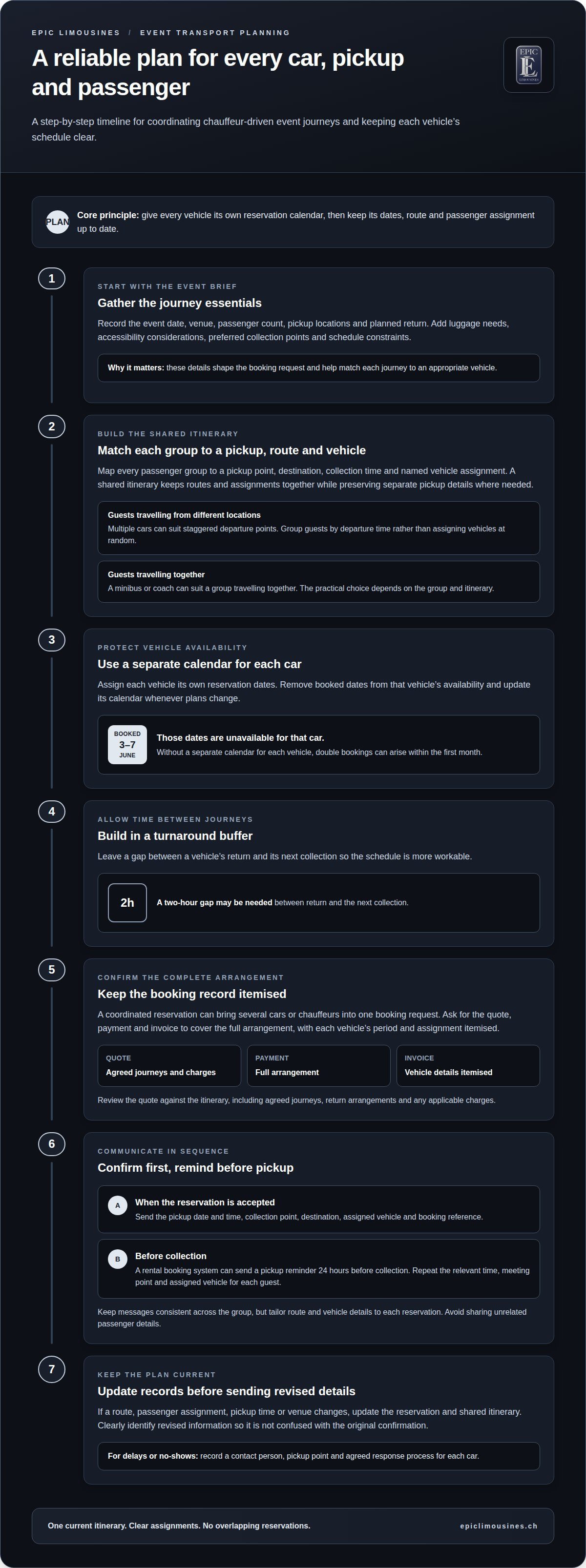
Begin with the event brief: date, venue, passenger count, pickup locations and planned return. A corporate dinner, for example, may involve separate hotel collections and one coordinated departure afterwards. These details shape the booking request and help match each journey to an appropriate vehicle. A complete brief also reduces follow-up and gives the organiser one itinerary to refine.
Next, list the journey requirements for each passenger group. Include luggage needs, accessibility considerations, preferred collection points and schedule constraints. A guest travelling directly to a conference may need a different arrangement from someone making a later stop. Mapping these differences early helps the organiser review a practical plan.
Review the quote against the itinerary before accepting it. It should distinguish the agreed journeys, return arrangements and any applicable charges. If a discount applies, its conditions should be clear beside the relevant service, not hidden in general terms. This comparison helps the organiser understand what is included and identify any mismatch between the planned route and the proposed booking.
Book as early as practical once the event date, schedule and transport needs are taking shape. There is no single lead time that suits every Swiss event. The date, location, number of pickup points, vehicle requirements and complexity of the itinerary all affect planning; a busy conference with several departure waves needs more coordination than one direct transfer.
After approval, keep one current itinerary for the organiser and a clear journey record for each passenger group. If the venue changes or a return time shifts, update the booking details rather than relying on scattered messages. For example, reflect a revised hotel pickup in the group’s assigned route so the transport plan remains aligned with the event schedule.
Before travel, use the final itinerary to brief guests on their collection point and assigned journey. This review can reveal practical gaps, such as a missing return arrangement or an overlooked stop, while there is still time to revise the plan.
How does seamless multi-car booking for events work in Switzerland?
For seamless multi-car booking for events in Switzerland, begin with one complete event schedule. Include the venue, arrival window, pickup locations, passenger groups and return requirements. Translate these details into linked vehicle assignments instead of treating each journey as an isolated booking. For a conference, guest arrivals and evening departures can be planned as separate transport phases.
Give each vehicle a defined role in the schedule. One car may collect a guest from a hotel while another handles a separate arrival point. Show each collection, destination and event time in a shared itinerary. This helps the organiser see how individual journeys fit the wider programme without assuming every passenger follows the same route.
Allow time between journeys when a vehicle must return before its next collection. A two-hour turnaround buffer can be needed between a car’s return and its next pickup. For an event with a reception followed by a later departure, this interval can provide room for the vehicle to complete its first journey before starting the next. Build the buffer into the schedule, rather than relying on a tightly packed sequence.
Before the event, the organiser and transport coordinator can review the final itinerary together. Confirm that each passenger group has a collection point, destination and assigned journey. If a programme change affects one departure, update the connected schedule so the change is visible across the plan. On the day, a designated event contact can relay relevant updates to passengers and the coordination team.
This structured approach helps connect separate bookings into one considered event plan. For tailored event transport in Switzerland, discuss your event transport requirements with a specialist team.
Epic Limousines
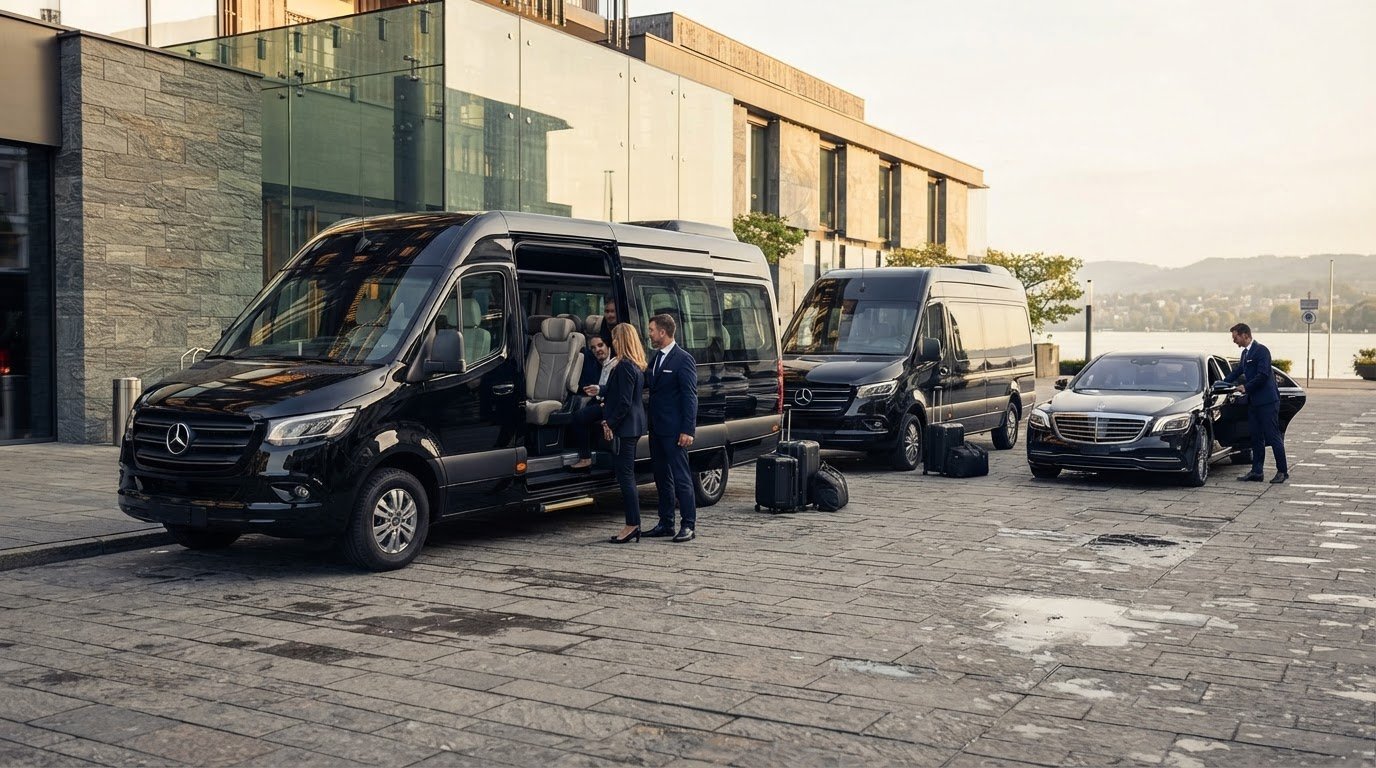
Epic Limousines provides chauffeur-driven transport for event journeys that call for considered planning and a discreet, premium experience. For business occasions, a WEF transfer or Mercedes-Benz S-Class Transfer may suit individual executive travel, while a Mercedes-Benz Sprinter Transfer can support group journeys. The right arrangement depends on the itinerary, passenger needs and collection points.
Turn to Epic Limousines when you’re coordinating event transport across several journeys and want a professional chauffeur service. Share the event schedule, pickup locations, destinations and return plans to discuss an arrangement around the practical details. Epic Limousines provides chauffeur-driven transport, rather than self-drive rental or on-demand taxi service.
Please contact Epic Limousines to discuss your event transport requirements.
Make the transport plan part of the guest experience
As your event takes shape, treat transport as part of the guest experience, not a detail to resolve at the last moment. A considered plan can reflect the occasion, whether guests are travelling between venues or attending a gathering in a rural setting. For resort occasions, Ski Resort Transfers can form part of the travel arrangement. The aim is a well-planned journey from pickup to arrival.
Use the event schedule as the starting point for a conversation about seamless multi-car booking for events. Share the locations, timings and guest requirements, then discuss an arrangement suited to the occasion. Contact Epic Limousines about event bookings to take the next step. With thoughtful coordination, your guests can focus on the event ahead.
Frequently Asked Questions
How do I stop two customers booking the same car?
Track availability for each vehicle against its confirmed dates and reservations. Keep one current record per car so the organiser can see whether it is already allocated. If two requests overlap, this makes the conflict visible before confirming the second arrangement. Record changes promptly to keep the schedule accurate.
What details are needed to arrange several cars for an event?
Prepare the event date, schedule, pickup and drop-off points, passenger groups, destinations and return arrangements. Include relevant luggage or accessibility needs and a contact person for event-day updates. A wedding itinerary, for example, may include separate guest collections and a later departure for the couple. These details help shape vehicle assignments and routes around the actual programme.
What cancellation, change, and waiting-time policies apply to group car bookings?
Review the booking terms for cancellation deadlines, change procedures and waiting time, rather than assuming they are identical for every arrangement. Check how the terms address a changed pickup time, revised passenger list, delayed event finish or passenger who does not arrive. Clear written terms help organisers understand how changes affect each journey and what charges may apply.