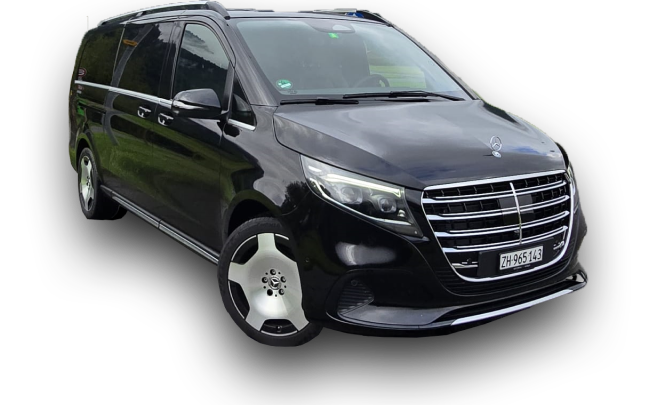
Working on the Go in a Chauffeured Car: Stay Productive
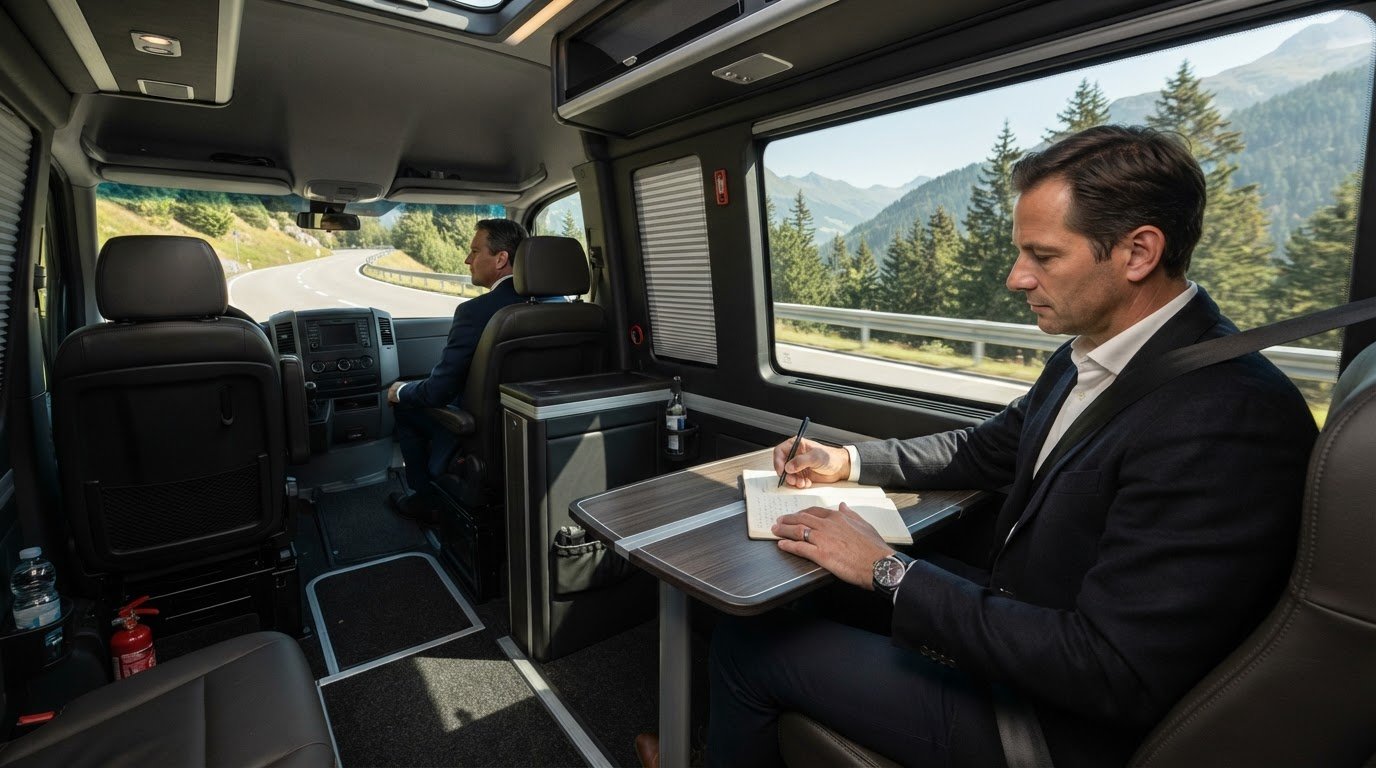
A journey can be more than the gap between meetings. Working on the go in a chauffeured car gives you time to read, prepare, answer messages or make calls while a professional handles the driving. Unlike public transport, the journey is arranged around your pickup and destination. Compared with a taxi, a pre-booked chauffeur service can provide a more considered setting for business travel.
It’s understandable to see travel time as time lost, especially when a full schedule leaves little room between appointments. A chauffeured ride won’t make every task suitable for the road, but it can offer a calmer transition between commitments and help you use the journey purposefully.
This article explains how chauffeur-driven travel compares with taxis and public transport, where time savings can come from, and what makes a car useful as a mobile office or private setting for a business discussion. You’ll also see when this approach fits best, from airport transfers to a day of meetings, and how Epic Limousines’ corporate travel services can support a more composed working day.
Key Takeaways
- Choose transport around your schedule and route: a pre-arranged chauffeur journey can offer a more direct, private alternative to shared public transport.
- Use travel time for focused tasks that suit the journey, while leaving driving and route decisions to the professional behind the wheel.
- Match your work setup to what you need to accomplish, and plan calls or sensitive discussions with privacy and discretion in mind.
- Consider a chauffeured transfer for airport connections or a day of business appointments when a composed journey matters.
Alternatives to taxis and public transport
A chauffeured car combines point-to-point transport with a professional driver, leaving you free to prepare for an appointment or answer messages. A taxi also takes you directly to your destination, but may not be arranged around a planned working schedule. On a train, you can work while travelling, but share the carriage and follow its stops and timetable. In a private car, the person driving cannot work at the same time.
For professionals working on the go in a chauffeured car, the key difference is that driving and work are separate. You can review a presentation, then arrive without having navigated traffic or searched for parking. A train may suit a route with convenient connections and tasks that can be done in a shared setting. A taxi can work for a straightforward ride, while a chauffeured journey can be planned as part of a broader business itinerary.
Training is one detail to understand, but it does not tell the whole story about a journey. New taxi and limousine drivers typically receive between 1 day and 2 weeks of on-the-job training, depending on the company and location, according to the U.S. Bureau of Labor Statistics. For a working trip, also consider how clearly pickup times, stops and destination changes are communicated. A planned route and a calm cabin can support focused work, while traffic still affects arrival time.
For safety in Switzerland, remain seated with your seatbelt fastened throughout the ride, including when using a phone or laptop. Keep devices secure and use them only when they do not interfere with the belt or distract the driver. Use headphones instead of playing audio aloud, and pause if a moving screen makes reading or typing uncomfortable. The chauffeur should focus on driving; you can handle calls, messages and documents. These habits support comfort and discretion without treating a moving car as a stationary office.
Convenience, productivity and time savings
The practical value of a chauffeured journey often lies in what you can do between appointments. Instead of concentrating on driving, you can review meeting notes, organise your calendar or prepare questions for a client call. These tasks fit naturally into a transfer between a hotel and an office, or between scheduled meetings. The journey becomes useful working time rather than another demand on your attention.
Time savings come from coordinating the trip, not from assuming traffic will disappear. A chauffeur can plan a route using professional navigation expertise and current traffic reports, then adjust it when delays are expected. For a passenger with appointments in different locations, including cities like Zurich, that can reduce the burden of route decisions and parking arrangements. It doesn’t guarantee an earlier arrival, but it gives the passenger room to use the journey productively.
- Before a meeting: review the agenda, confirm priorities and prepare a concise briefing.
- Between appointments: answer messages or make a call, then pause work before arriving.
- During a longer transfer: organise notes or plan the next stage of the day.
Convenience also depends on your itinerary. A single transfer can provide a quiet interval for focused work; a day with several stops can help you maintain continuity between engagements. If your destination changes or you need an extra stop, communicate the adjustment promptly so the chauffeur can respond to the revised plan. A limousine can provide a composed setting, but demanding tasks still require realistic expectations about movement, connectivity and comfort.
For the best use of travel time, match the task to the journey: reserve detailed writing for a calm stretch, and leave brief calls or calendar checks for shorter intervals. Passengers should remain seated and belted, with devices secured rather than balanced loosely. A chauffeur-led journey for business travel with Epic Limousines can make the transition between commitments more considered, while keeping driving and route management with the professional.
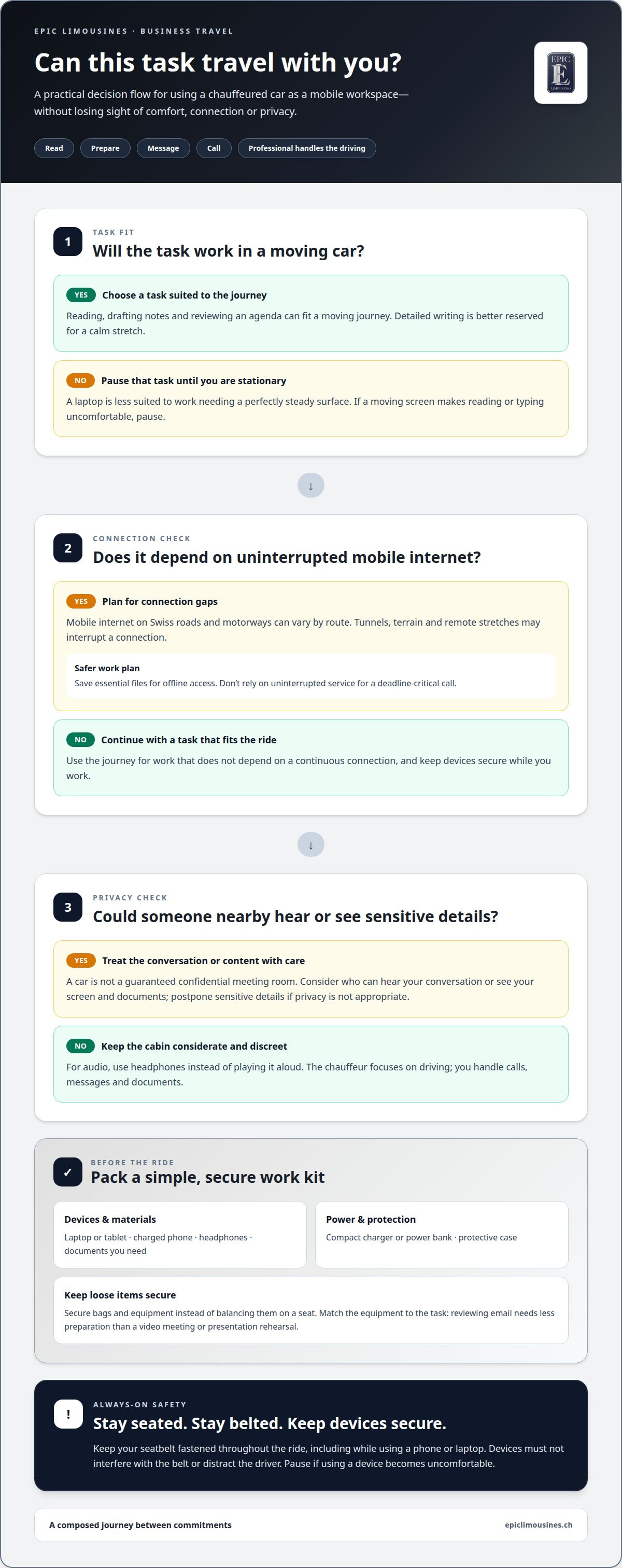
Using a chauffeured car as a mobile office or boardroom
A moving car can support focused individual tasks or a discreet conversation between colleagues. The right setup depends on the journey, the devices you use and the sensitivity of the discussion.
Equipment for working in the car
A practical car-based office relies on portable equipment that stays secure and is easy to put away. Bring a laptop or tablet, a charged phone, headphones and any documents you need. A compact charger or power bank can help keep devices ready, while a protective case keeps equipment together between stops. Secure your bags and loose items instead of balancing them on a seat.
When booking a journey that includes work, consider the equipment and tasks you’ll bring. Reviewing email needs less preparation than a video meeting or presentation rehearsal. Mobile internet on Swiss roads and motorways can vary by route; tunnels, terrain and remote stretches may interrupt a connection. Save essential files for offline access and don’t rely on uninterrupted service for a deadline-critical call.
Use a moving journey for reading, drafting notes or reviewing an agenda. A laptop is less suited to tasks that need a perfectly steady surface. Keep your seatbelt fastened and pause if using a device becomes uncomfortable. These choices make the cabin more useful without distracting the driver.
Privacy and confidentiality risks
Privacy risks arise when spoken details, screen content or documents are visible to someone nearby. A chauffeur service provides a vehicle and professional driver, but a car shouldn’t be treated as a guaranteed confidential meeting room. Consider who can hear your conversation and whether another passenger can see your screen before opening sensitive material.
For a client call, use headphones and speak discreetly, but avoid sharing confidential details aloud if others are present. Position your screen away from windows and other passengers, lock it when you step out, and keep papers in a closed folder. General planning between colleagues may suit a discussion in the car. For legal, financial or personnel matters, leave identifying details out of the conversation and arrange the sensitive exchange in a more suitable setting.
Before departure, agree with colleagues which topics are appropriate to discuss during the ride. This simple boundary helps keep the journey productive while respecting passenger privacy and the driver’s focus.
What equipment should I bring to work in a car?
Choose a compact work kit for the tasks planned during your journey, without relying on vehicle features you haven’t arranged. A laptop or tablet suits document review, while a phone handles brief calls and calendar changes. A protective sleeve keeps devices together, and a small pouch makes adaptors and cables easier to retrieve at a stop.
Consider power, posture and secure storage before packing. Bring the charging cable for your device, plus a power bank if you use one. A lightweight headset can make calls clearer without playing audio aloud. Avoid bulky stands, large monitors and loose accessories; they take up space and can be awkward to manage in a moving vehicle.
- For reviewing documents: pack a tablet or laptop, a compact folder and a pen.
- For calls: bring a charged phone and headphones, and save key contact details.
- For a presentation: keep slides accessible offline and carry any essential adapter.
- For a longer work block: include a charger, water and a simple task list.
Keep your kit proportionate to the work. Preparing a client briefing, for example, usually requires fewer items than presenting from a laptop. Store equipment in a closed bag when it isn’t in use, and keep essentials within easy reach without placing them where they could move around. Your seatbelt must remain fastened, so avoid setups that interfere with it or make it uncomfortable to sit.
A chauffeured car provider can plan the journey around your stated work requirements, but don’t assume every vehicle includes a desk, power outlet or presentation equipment. A focused brief helps set realistic expectations: note the devices you’ll carry, whether you need to make calls, and which tasks can wait until arrival. For a workday that calls for planned transport, arrange a journey with Epic Limousines.
Epic Limousines
Epic Limousines provides chauffeur-driven transport for business journeys where a calm, private setting can help you use travel time thoughtfully. Share your pickup point, destination and schedule when arranging your journey, then choose tasks suited to the time in transit. A Mercedes-Benz S-Class Transfer can suit an individual business journey, while a Mercedes-Benz Sprinter Transfer can serve group travel. For a busy event itinerary, WEF transfer services provide another transport option.
A chauffeured car isn’t a guaranteed office setup, so plan around the equipment and connection you bring. Keep sensitive discussions discreet, secure your devices, and leave driving and route decisions to the professional. This approach can work well for airport transfers, meetings or event travel when continuity and comfort matter more than a fixed desk.
To discuss a journey that fits your business schedule, contact Epic Limousines.
Make the journey part of your workday
Before your next business trip, think of the journey as a planned transition, not just a gap between destinations. Decide what deserves your attention in transit and what is better handled after arrival. Setting a clear priority, such as reviewing a brief or preparing for a discussion, can make the time feel purposeful without turning every minute into another task.
Working on the go in a chauffeured car is most useful when the journey supports the way you prefer to work. Keep your plans flexible, leave room to pause, and treat privacy and comfort as part of the decision. For travel that fits your schedule, contact Epic Limousines today.
With a considered plan and professional transport, you can arrive ready for what comes next.
Frequently Asked Questions
How can a professional chauffeured car service support productive work on the go?
A professional chauffeur service lets you focus on work while a driver handles the journey. For example, you can review a meeting brief between appointments instead of concentrating on navigation. Epic Limousines offers Wi-Fi and phone chargers on request, which can support device use during the ride. Mention your work priorities when arranging transport so your journey can fit your schedule.
How can a chauffeured car provider arrange a quiet, comfortable ride for calls or meetings?
When arranging the ride, describe the work you plan to do, such as a private call or a discussion with colleagues. This helps shape the transport around your priorities. Epic Limousines places emphasis on privacy and confidentiality and provides professional chauffeur-driven service. For calls, headphones and discreet speech can help keep the conversation considerate of others in the vehicle.